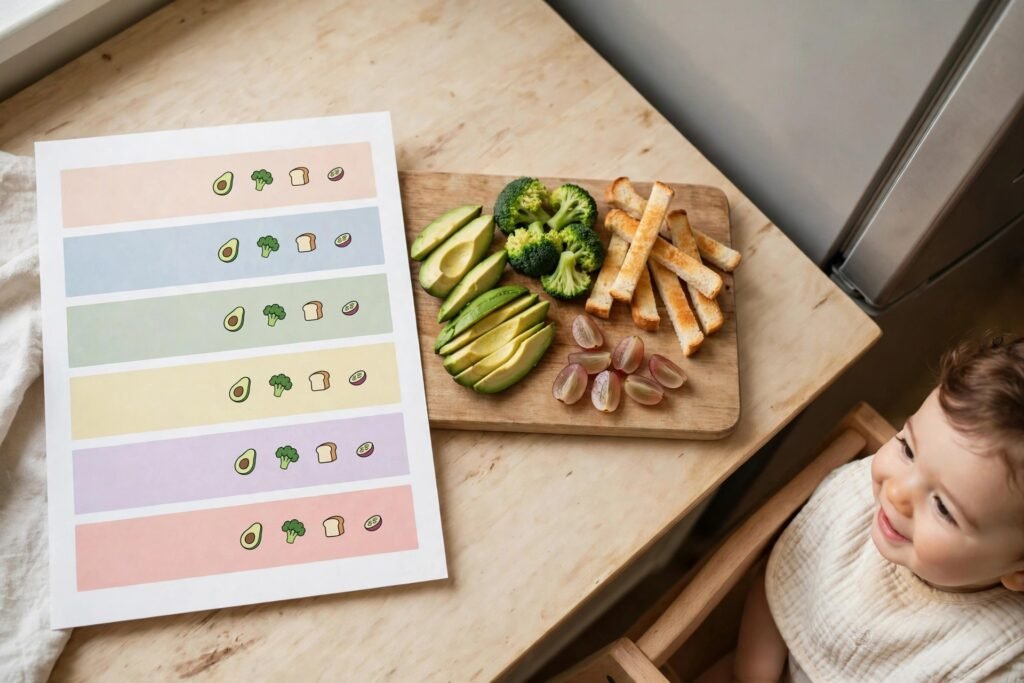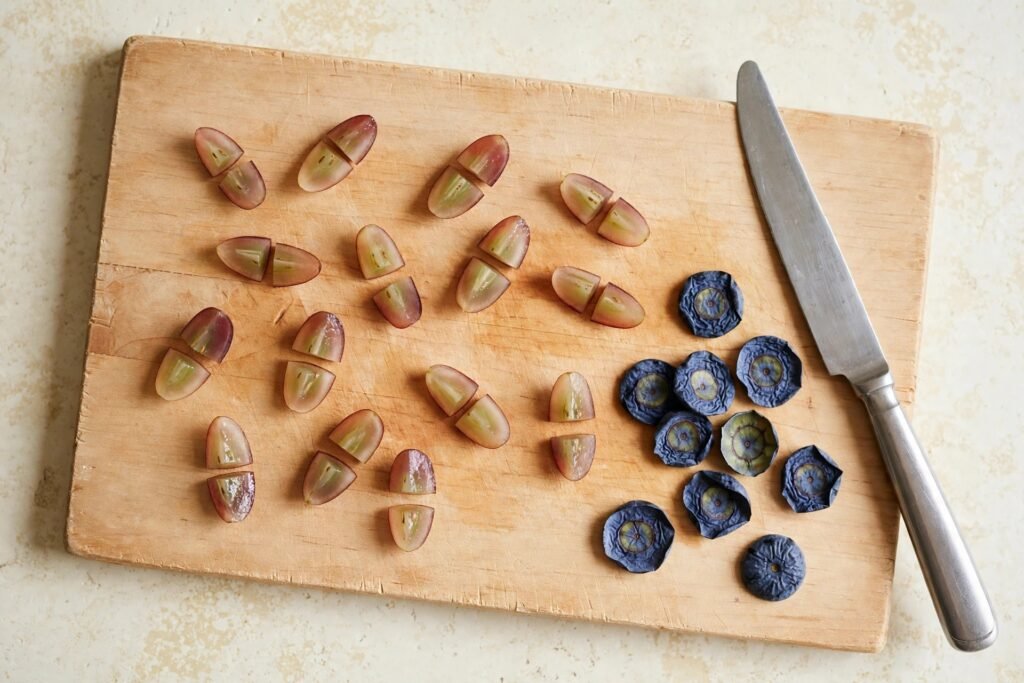
Introducing allergens to baby sounds like a clinical procedure. It isn’t one. It’s feeding, a spoonful of thinned peanut butter stirred into oatmeal, done deliberately, one food at a time, instead of by accident some rushed Tuesday. A generation of parents was told to delay foods like peanut and egg; the current guidance from the CDC, the AAP and the NHS says the opposite. Don’t delay. Start these foods around the time solids start, and keep them on the menu.
Below: why the advice flipped, when to start, the nine foods one by one, the reaction signs, and a printable tracker.
Medical disclaimer: This article is general information for parents and is not medical advice. Guidance on feeding, health and development can depend on your baby’s individual needs. If you have concerns about your child, please speak to your pediatrician or another qualified health professional.
Read this first if it applies to you: If your baby has severe eczema, has already reacted to a food, or has a diagnosed egg allergy, talk to your pediatrician before starting peanut. Nothing here is a home food-challenge protocol: after any reaction, the steps stop at “stop the food and get medical advice.”
Table of Contents
Why the advice flipped
For years, the standard counsel was avoidance. Then the research turned: delaying allergenic foods showed no benefit, and for peanut, early introduction proved protective. The turning point was the LEAP study in 2015. It followed more than 600 higher-risk infants (severe eczema, an egg allergy, or both), starting at 4 to 11 months old. Babies fed peanut early, and kept on it regularly, were far less likely to develop peanut allergy than those who avoided it; NIAID’s summary puts the reduction at 81%, and a follow-up found the protection lasted. Protective effects were also found for early egg and infant-appropriate dairy. The NHS states the flip side plainly: delaying peanuts and hen’s eggs beyond the 6-to-12-month window may increase the risk of developing an allergy to them.
One qualifier that matters: early introduction lowers risk. It does not guarantee any individual child will stay allergy-free, and the strongest trial evidence is for peanut in higher-risk babies.
When to start
For most babies, allergen introduction happens when other solids are introduced, from around 6 months, with ordinary first foods, and never before 4 months. Readiness comes first: if your baby can’t yet sit with support, hold her head steady and swallow rather than push food out, no allergen schedule matters yet. Our guide to the signs your baby is ready for solids is step one.
The authorities phrase the timing slightly differently, and we’d rather show you that than iron it flat. The CDC and NHS anchor on “around 6 months, with other foods.” The AAP’s current parent guidance leans earlier once solids are underway: peanut-containing products, it says, should ideally be introduced as early as 4 to 6 months, also NIAID’s window for higher-risk babies (severe eczema and/or egg allergy), after a conversation with the pediatrician. Around 6 months for most families, then; earlier and guided for higher-risk ones.
The shared steps
Every authority agrees on the method:
- Start with a few ordinary, low-risk first foods so your baby has the hang of eating, then bring the allergens in one at a time.
- One new food at a time, in a small amount at first. Then build up. The AAP’s plain-language amounts: a maintenance portion is about 2 teaspoons of peanut butter (thinned, see below) or about a third of a well-cooked egg.
- Watch afterward, and note what happened. A reaction with one clear new food has an identifiable cause; three new foods on one day don’t.
- Keep each tolerated food in the regular diet. Introduction is not a one-off test (more below, it’s the step most often dropped).
On spacing, the honest picture: the CDC suggests waiting 3 to 5 days between each new food, the cautious approach, and the one this guide’s tracker is built around. The AAP’s parent page says wait at least a day. And the 2020 North American consensus guidance says new foods, including allergenic ones, can be introduced on successive days, with no evidence of harm. Our default is the CDC’s slower pace because it’s easiest to track; the tracker therefore records dates without printing a required gap.
The nine foods, one by one
Work through them in roughly this order: peanut and egg first, where the evidence and timing questions concentrate, then the rest over the following weeks, slotted around your baby’s other first foods. Our first foods chart shows where they sit in the wider menu.
1. Peanut
Stir smooth peanut butter into warm oatmeal or a fruit or vegetable purée, or dissolve it in a little breast milk or formula and spoon-feed it. Two rules are absolute: never whole peanuts or pieces of peanut (an airway-blockage risk, and inhaled pieces can cause a severe, possibly fatal chemical pneumonia; whole peanuts wait until a child chews reliably, usually at least 4 years old), and never a thick spoonful of peanut butter straight from the jar, thin it every time. Build up to about 2 teaspoons per serving, and keep it in the weekly rotation.
2. Egg
Well-cooked, always: hard-boiled and mashed, or scrambled until fully set. Build up to about a third of an egg, then more as appetites grow. Older advice separated the yolk from the white and introduced them months apart. That’s dated. Current guidance is the whole egg, cooked.
3. Cow’s milk (in food)
Milk arrives in food long before it arrives in a cup: unsweetened yogurt, cheese, and milk used in cooking are all fine from around 6 months. What waits until after 12 months is cow’s milk as the main drink. A few spoonfuls of whole-milk yogurt is a complete introduction.
4. Tree nuts
Almond, cashew and walnut follow the peanut rules exactly: smooth nut butters thinned into oatmeal or purée, or nuts finely ground and stirred through food. Never whole, never in chunks. The AAP’s 2-teaspoon portion guidance covers other nut butters too.
5. Sesame
Tahini is the vehicle: sesame paste, thinned and stirred into purée, oatmeal or yogurt the same way you’d use peanut butter (the AAP counts tahini alongside the nut butters for portions).
6. Soy
Soft tofu is the easiest form: mashed, in small soft pieces for a baby managing finger foods, or blended into a purée. Soy yogurt works too.
7. Wheat
Wheat usually sneaks in through ordinary weaning foods: oatmeal cereals, soft pasta, a strip of toast with a topping. That’s a legitimate introduction. Just make the first wheat foods land on a day when wheat is the new thing.
8. Fish
Well-cooked fish, flaked, with the bones carefully removed. Mix it into a vegetable purée or serve it plain, checking every flake for bones with clean fingers first.
9. Shellfish
The NHS rule is the whole rule here: shellfish must be cooked through, never raw or lightly cooked for babies. Shrimp, finely chopped or minced into a purée or soft pasta sauce are the practical first form.
One dated idea to skip: the skin test
Some older guides suggest rubbing a little peanut butter on your baby’s cheek or lip first and waiting. No authority we read recommends it: a smear on skin isn’t an introduction, and a skin reaction, or the lack of one, doesn’t tell you what eating the food will do. Introduction means feeding a small amount of the food itself.
If your baby is higher risk: talk first, and what’s changed about testing
“Higher risk” has a specific meaning here: babies with severe eczema, an egg allergy, or both (NIAID’s definition), plus, per the AAP’s parent page, any baby who has already had an immediate allergic reaction to a food. If that’s your baby, the first step is a conversation with the pediatrician about when and how to introduce peanut.
Where guidance has genuinely moved is what comes next. The 2017 NIAID guideline said an allergy blood test or skin prick test should be “strongly considered” before peanut for these babies. Later guidance went the other way: the 2021 Canadian guidance does not recommend pre-emptive screening, the 2020 consensus says screening is “not required,” and in 2024 the AAAAI, the allergists’ own academy, answered directly: “The standard of care now is not to screen.” One practical reason (Mass General’s early-introduction program): waiting for testing can unnecessarily delay introduction. Screening “may be preferred by some families”, but no test is required before peanut, and never skip one a clinician has advised.
The NHS casts the talk-first net wider: talk to your GP or health visitor first if your baby has a diagnosed food allergy or eczema, or there’s a family history of food allergies, eczema, asthma or hay fever. Family history alone doesn’t put a baby in the higher-risk protocol above, but in the NHS’s more cautious reading, it earns a conversation first.
Reactions: what to watch for, and what to do
Reactions are the part parents most want spelled out, so here it is plainly. The NHS’s list of food allergy signs: diarrhea or vomiting; a cough; wheezing and shortness of breath; itchy throat and tongue; itchy skin or a rash; swollen lips and throat; a runny or blocked nose; sore, red and itchy eyes. If a new food brings diarrhea, a rash or vomiting, the AAP’s instruction is to stop that food and consult your pediatrician, never to re-try it at home later to “check.” Re-challenges belong to clinicians.
A severe allergic reaction (anaphylaxis) is uncommon but can be life-threatening: call 911 immediately and get medical help. Swelling of the lips or throat, wheezing or difficulty breathing are emergency signs, not watch-and-wait signs.
One confusion worth defusing: gagging is not an allergic reaction. A baby who gags on a new texture is doing something normal and protective; a reaction is the skin, gut, nose, eyes or breathing signs above. Gagging vs choking walks through the difference, worth reading before solids start.
After the first tastes: keep them in the diet
The LEAP babies weren’t protected by a single heroic spoonful, they ate peanut regularly, for years. The NHS gives everyone the same instruction: once an allergenic food is introduced and tolerated, keep offering it as part of your baby’s usual diet to minimize the risk of allergy. Peanut in oatmeal on rotation, egg at breakfast a few times a week, yogurt as the default dessert. Egg and fish pull double duty, both are iron-rich first foods too. A few months in, breakfast smoothies become an easy peanut-butter vehicle, see smoothies for babies at 6 months for thinning nut butters into them safely. Keeping foods in rotation is the quiet second half of the job.
A small comfort: milk and egg allergies are often outgrown, while a peanut allergy is generally lifelong, another reason the tracker below is worth keeping. And unless you’re allergic yourself, you don’t need to avoid allergenic foods during pregnancy or breastfeeding.
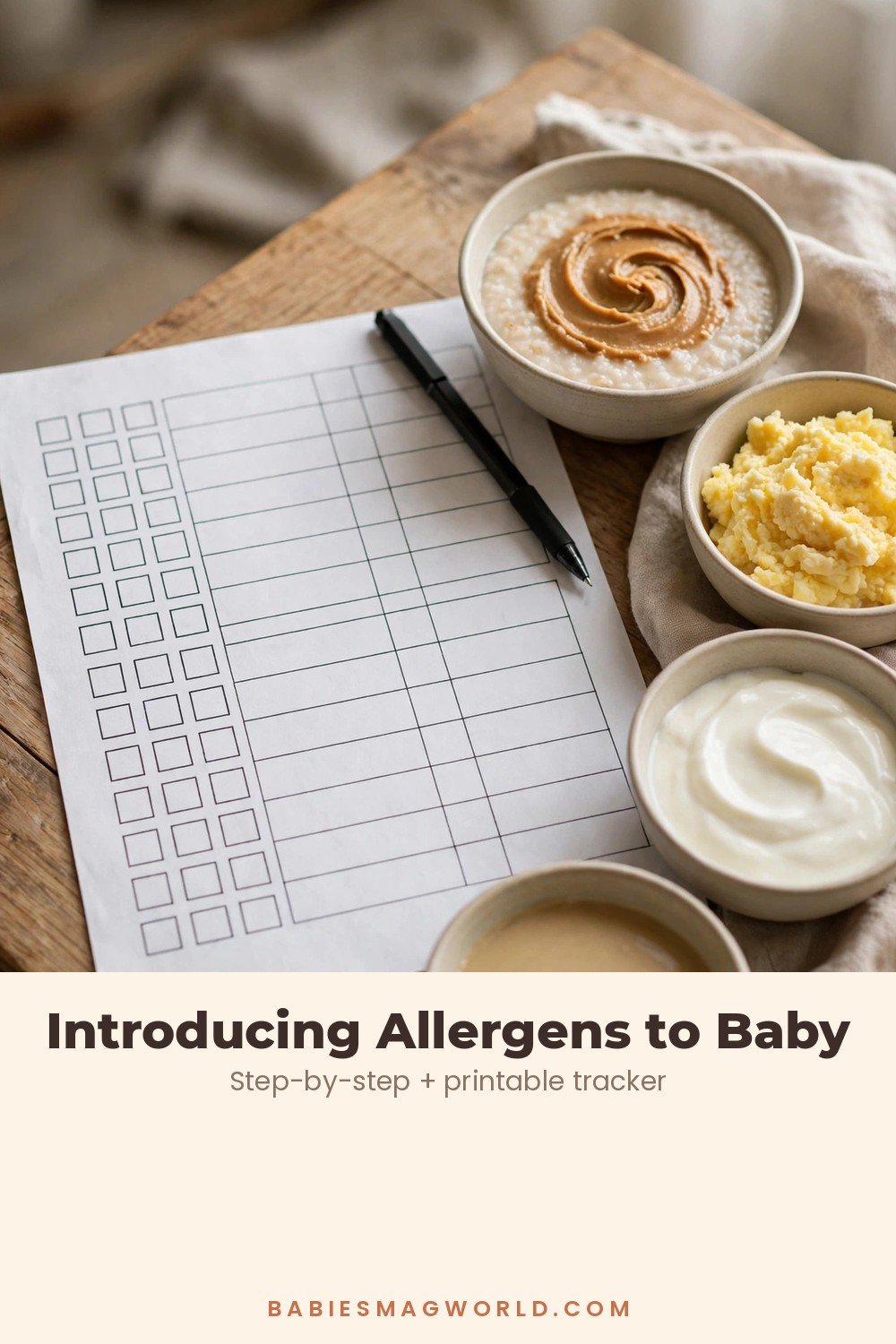
The printable allergen tracker
Print it, stick it on the fridge, and fill it in with the pen that lives on top of the microwave. This is the paper half of the job: one new food at a time, in small amounts, from around 6 months, alongside other first foods, and once tolerated, keep it on the menu. No required gap is printed here on purpose (see the spacing note above): the dates column tells the story.
| Allergen | First offered (date) | Form served | Amount built up (small taste → more) | Reaction — what happened, when, what we did | In regular rotation? (last served) |
|---|---|---|---|---|---|
| Peanut — smooth butter, thinned · never whole nuts | |||||
| Egg — well-cooked | |||||
| Cow’s milk — in food or yogurt, not as a drink | |||||
| Tree nuts — ground or thinned butters · never whole | |||||
| Sesame — tahini, thinned | |||||
| Soy | |||||
| Wheat | |||||
| Fish — cooked through, bones removed | |||||
| Shellfish — cooked through, never raw |
Reaction signs (keep with the tracker): rash or itchy skin · swollen lips · vomiting or diarrhea · cough, wheeze or difficult breathing · itchy throat or tongue. Stop the food. Worried, or any swelling or breathing signs? Get medical help now. Severe reactions: call 911.
On the fridge copy too: if your baby has severe eczema or has reacted to a food before, talk to your pediatrician before starting peanut.
Introducing allergens to baby is, in the end, nine ordinary foods and a bit of paperwork: do it on purpose, write it down, keep them coming back to the table.
Sources
- CDC, “When, What, and How to Introduce Solid Foods”
- American Academy of Pediatrics (HealthyChildren.org), “When to Introduce Egg, Peanut Butter & Other Common Food Allergens to a Baby”
- NHS Best Start in Life, “Food allergies”
- NIAID, “Addendum Guidelines for the Prevention of Peanut Allergy: Summary for Parents and Caregivers” (2017)
- AAAAI, “Ask the Expert: Allergy testing prior to peanut introduction in children” (2024), American Academy of Allergy, Asthma & Immunology
- Guideline comparison: CPS/CSACI 2021 vs North American Consensus 2020 vs NIAID 2017, Allergy, Asthma & Clinical Immunology (2024)