Medical disclaimer: This article is general information for parents and is not medical advice. Guidance on feeding, health and development can depend on your baby’s individual needs. If you have concerns about your child, please speak to your pediatrician or another qualified health professional.
You cooked a real dinner. Your toddler ate three bites of pasta, licked the dip off one piece of broccoli, pushed the plate away and asked for crackers. If that scene runs on repeat, it’s a scene in most houses: the AAP notes a toddler may eat only one or two preferred foods, and nothing else, for weeks at a time. Picky toddler meals are less a cooking problem than a system problem, and systems can be fixed more easily than toddlers can. This page isn’t another list of twenty dinners: it’s the formula the dinners are built from, a 5-day plan built on it, and, because dinner desperation and genuine worry feel similar at 6 p.m., a straight section on when picky eating is more than a phase.
Table of Contents
First, what to stop worrying about
Growth slows down after the first year, and appetite slows with it. The one-year-old who ate everything in sight becomes a two-year-old who seems to run on air and opinions. The AAP describes the usual pattern: picky phases and food jags, one or two foods on repeat, then dropped, are common and run their course.
The frame that makes the rest of this article work comes from Ellyn Satter’s division of responsibility: you are responsible for what food is offered, when, and where. Your child is responsible for how much, and whether, they eat of what’s offered. KidsHealth states the child’s side the same way: they decide what and how much to eat. Your job ends at the plate arriving, on time, with reasonable food on it. What happens next is genuinely not your department, and letting go of it is what takes the battle out of the meal.
Judge the week, not the day. MyPlate’s guidance: balance amounts over a few days or a week, not per day, toddler intake lurches: a huge lunch, a refused dinner, a breakfast that makes up for both.
The ground rules the plan runs on
Four ground rules sit underneath every meal in the plan below.
- No pressure, no force, no bribery. The AAP is blunt about why: pressuring or punishing around food can make a child actively dislike foods they might otherwise have liked, and bribing with a treat makes the treat more exciting and the target food an unpleasant chore. Dessert is never the prize for finishing vegetables.
- One family meal, no short-order cooking. Serve one meal for everyone, including at least one food your child reliably eats. If they refuse the rest, you don’t cook a second meal, that reliable food is their dinner, and that’s fine.
- Predictable meals and sit-down snacks. Satter’s structure: regular meals and snacks at roughly predictable times, nothing but water in between, a child who grazes all afternoon arrives at dinner neither hungry nor interested.
- Small portions, seconds on request. Start small: a rule of thumb from the Pennsylvania Academy of Nutrition and Dietetics (the state affiliate of the national Academy) is about a tablespoon of each food per year of age, adding more as needed. A small plate finished beats a loaded plate pushed away; seconds are the mechanism.
The plate formula: every meal built the same way
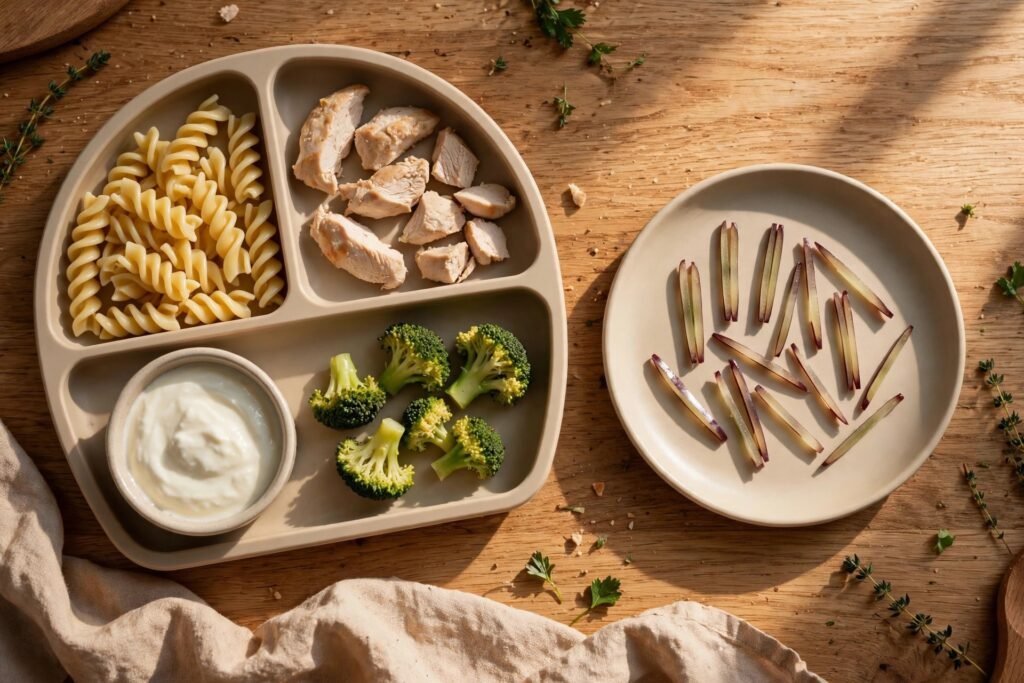
Here is the system, ours, not a formula published by any authority, though every slot is anchored in the guidance above:
Anchor food + protein + produce + dip.
- Anchor food, one thing your child reliably eats: pasta, toast, rice, pancakes. This is the AAP’s “include at least one food your child likes with each meal”, the anchor is what makes the plate safe to approach.
- Protein, meat, deboned fish, egg, beans, lentils, yogurt, cheese. The AAP suggests higher-protein foods like meat and deboned fish at least twice a week; eggs, beans and dairy rotate through the rest.
- Produce, a fruit or vegetable, prepped safely. It’s the slot that changes most day to day, variety over the week is how exposure happens.
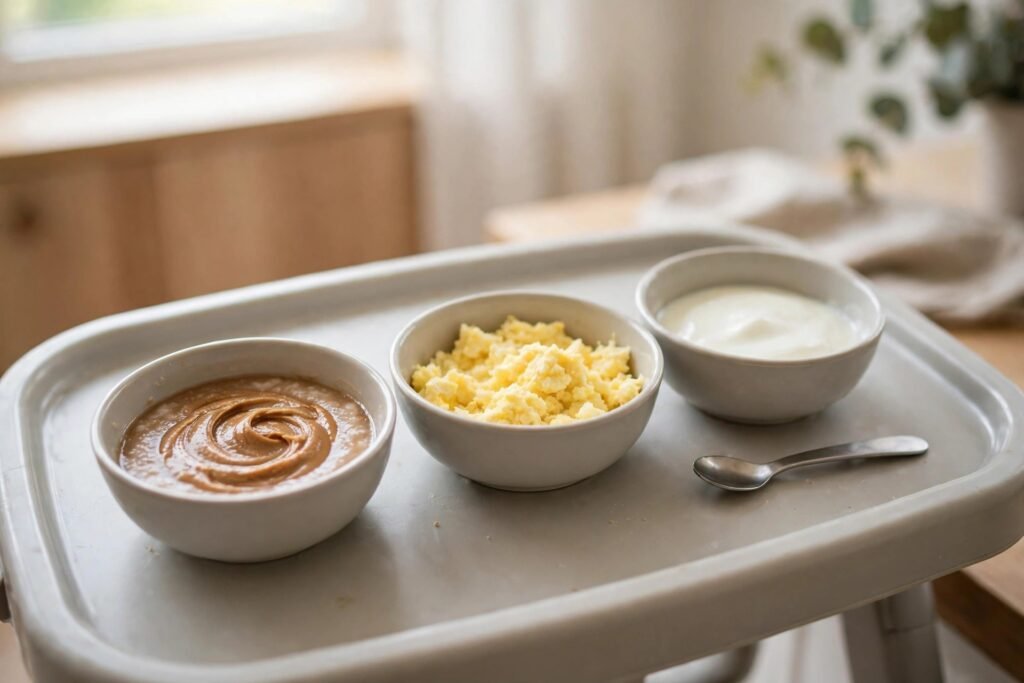
- Dip, kids this age tend to enjoy any food involving a dip, as the AAP notes. Hummus, yogurt dips, guacamole, thinned nut butter. Sauce on the side, always, an invitation, not a coating.
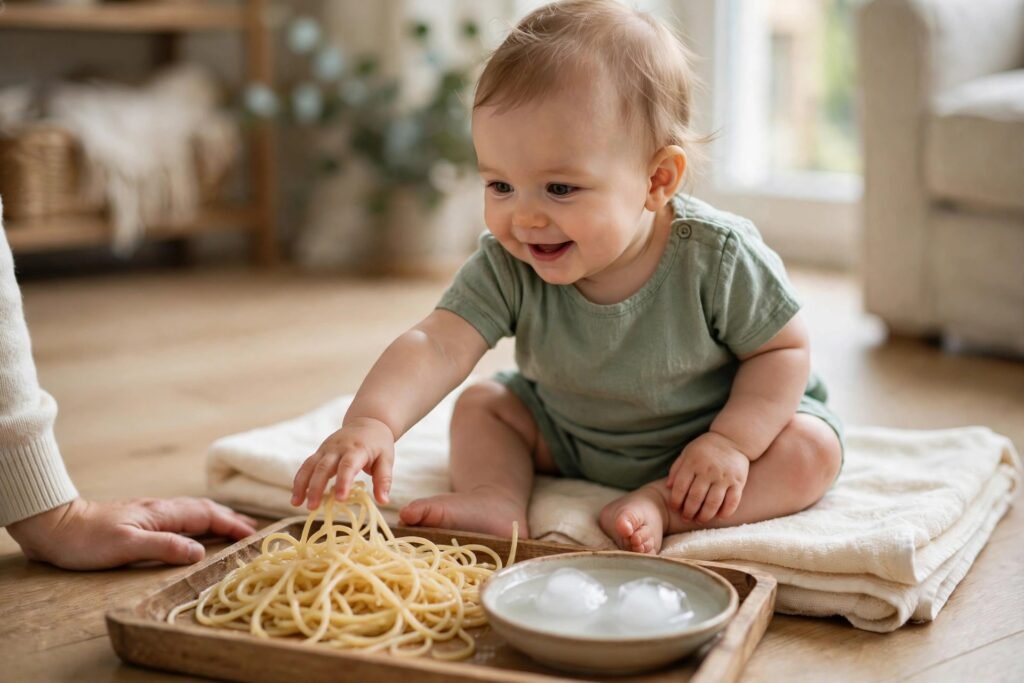
Then the quiet engine underneath it all: repeated, neutral exposure. New and refused foods keep appearing, in small amounts, with no commentary and no requirement. The AAP says it may take 10 or more times tasting a food before a toddler’s taste buds accept it, and “tasting” is doing generous work in that sentence. Looking counts. Smelling counts. Touching, licking and spitting it back out count too. Keep the new food in its own corner of the plate, not touching the safe food, and let it be boring. The goal isn’t to get the food eaten today; pressure-free repetition is what acceptance is built from over months.
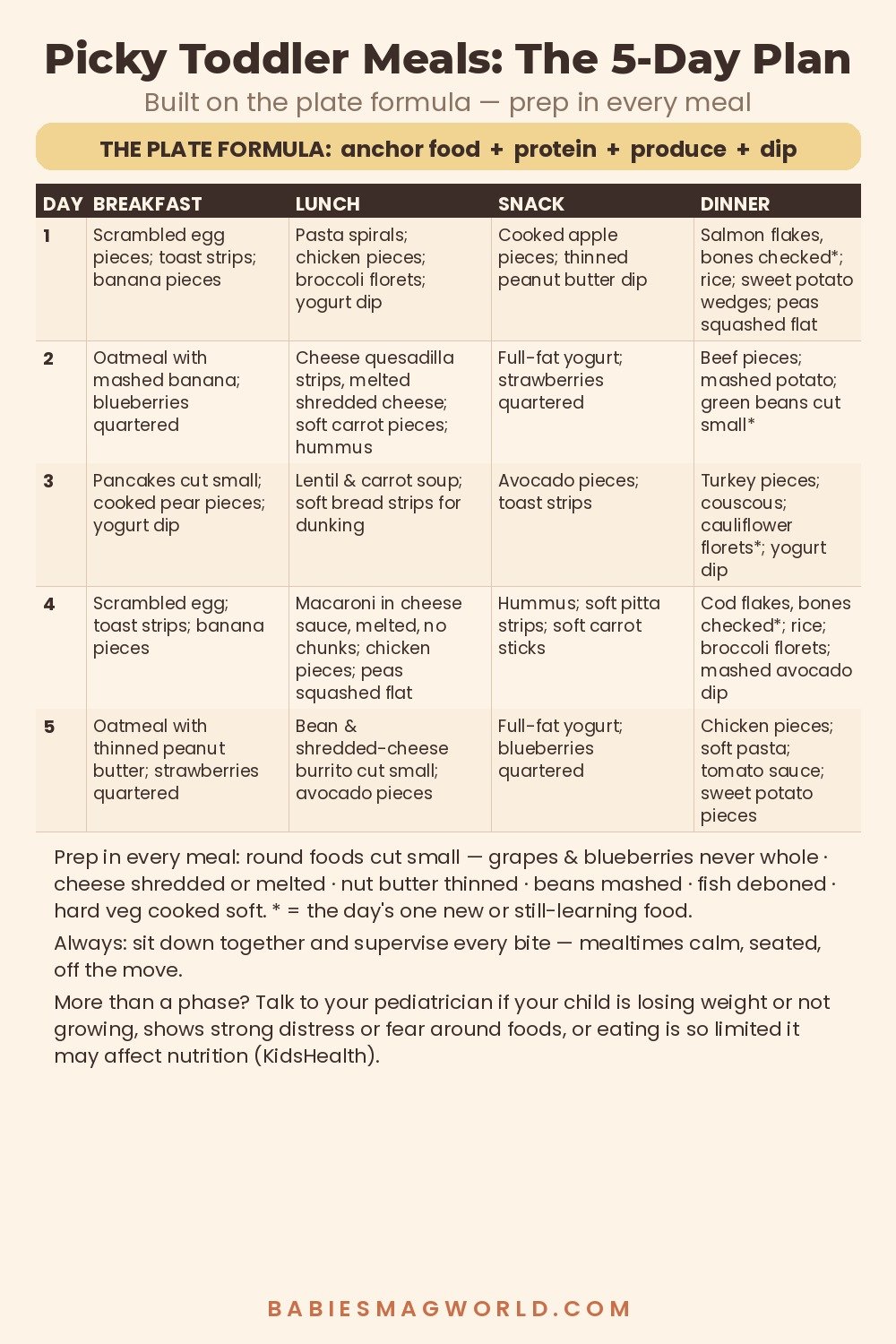
The 5-day plan
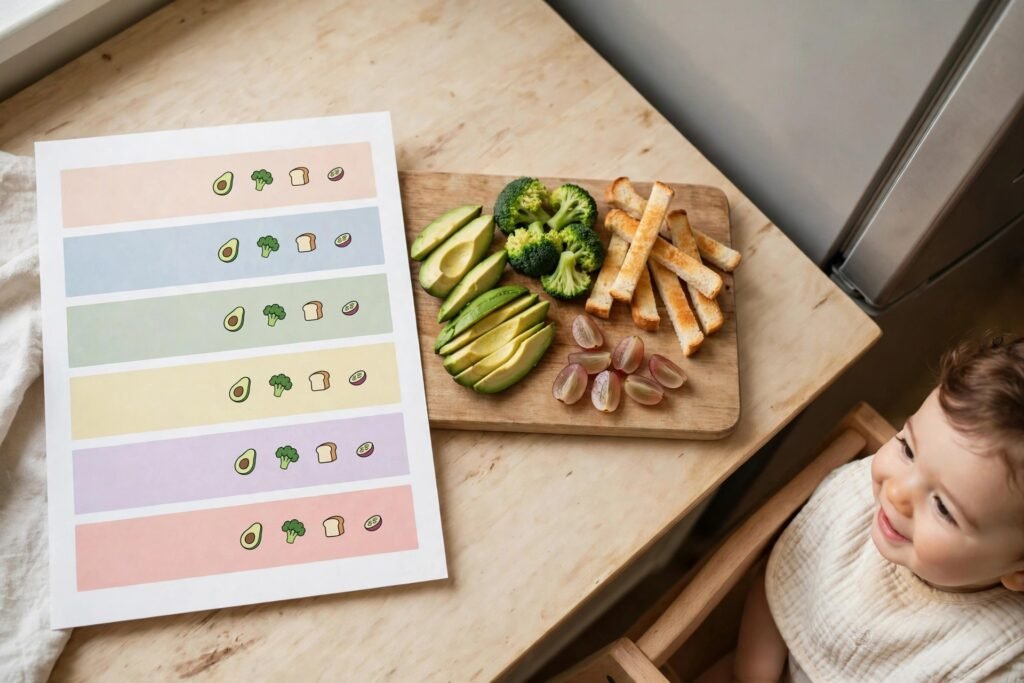
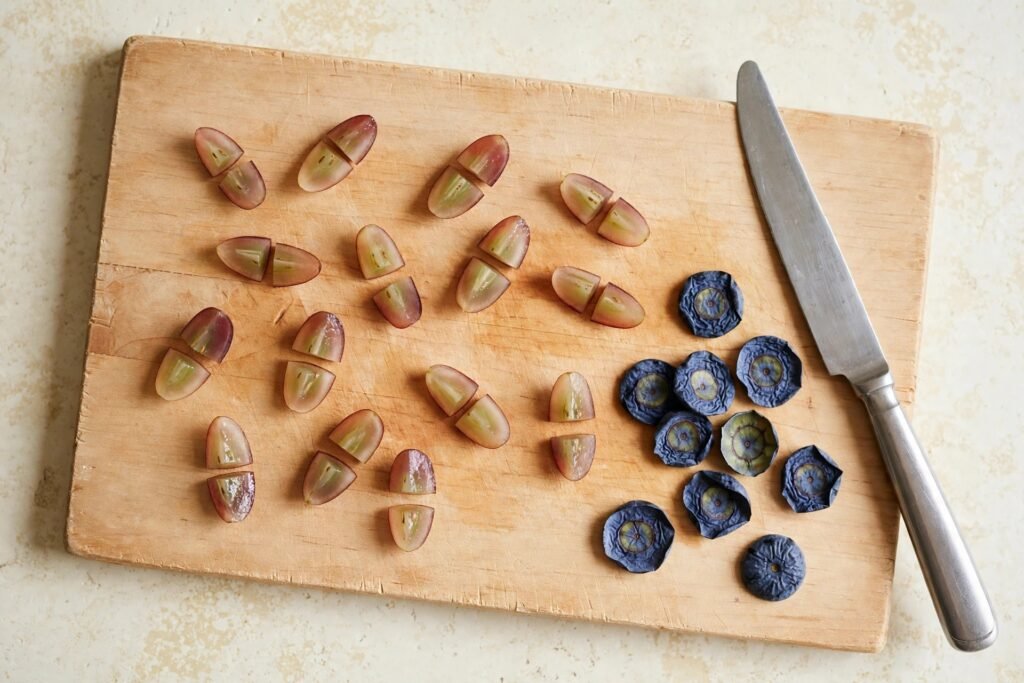
Five days of meals, built on the formula, with anchors repeating the way they do in real kitchens. Foods marked (new) are the day’s one new or still-learning food, served small and next to foods that are already friends. Every meal carries its prep, because a plan you have to cross-check against a safety page fails at 6 p.m.: round foods cut into small pieces (about half an inch), grapes and blueberries never whole, cheese shredded or melted, nut butter thinned, beans mashed, fish deboned, hard vegetables cooked soft. That standard is built from the CDC’s choking-hazard guidance, MyPlate’s piece size and the Academy’s under-4 exclusions, hence no popcorn, whole nuts, pretzels or hot dogs in these five days. For the full technique, see our guide to how to cut grapes, blueberries and other round foods safely. Sit down together and supervise every bite, mealtimes stay calm, seated, and off the move.
| Day | Breakfast | Lunch | Planned snack | Dinner |
|---|---|---|---|---|
| 1 | Scrambled egg in soft pieces; toast strips; banana in pieces | Soft pasta spirals, halved; tender chicken in ½-inch pieces; steamed broccoli in small florets; yogurt dip | Apple cooked soft, in pieces; peanut butter thinned with water, as a dip | Salmon flakes, bones checked (new); soft rice; sweet potato wedges cooked soft and cut into ½-inch pieces; peas squashed flat |
| 2 | Thick oatmeal with mashed banana stirred through; blueberries quartered | Cheese quesadilla (soft tortilla, melted shredded cheese), cut into thin strips about ½ inch wide; carrot cooked soft, in ½-inch pieces; hummus | Full-fat yogurt; strawberries quartered | Tender beef in ½-inch pieces; mashed potato; green beans cooked soft and cut into ½-inch pieces (new) |
| 3 | Pancakes cut into ½-inch pieces; pear cooked soft, in pieces; yogurt dip | Lentil and carrot soup (lentils split; carrot cooked in, in plain sight); soft bread strips for dunking | Avocado in pieces; toast strips | Turkey in tender ½-inch pieces; couscous; cauliflower steamed soft, in ½-inch pieces (new); yogurt dip |
| 4 | Scrambled egg; toast strips; banana in pieces | Soft macaroni in cheese sauce (cheese melted in, no chunks); chicken in ½-inch pieces; peas squashed flat | Hummus; soft pita strips; carrot sticks cooked soft | Cod flakes, bones checked (new); soft rice; broccoli, small steamed florets; mashed avocado dip |
| 5 | Oatmeal with thinned peanut butter stirred through; strawberries quartered | Mashed bean and shredded-cheese burrito in a soft tortilla, cut into ½-inch pieces; avocado in pieces | Full-fat yogurt; blueberries quartered | Chicken in tender ½-inch pieces; soft pasta; tomato sauce (new); sweet potato cooked soft, in ½-inch pieces |
Drinks, because they change the math. Water and plain milk are the plan’s drinks. At 12 to 23 months, the CDC frames dairy as about 2 servings a day across milk, full-fat yogurt and cheese combined, servings, not a milk quota. KidsHealth adds the ceiling: keep milk itself to about 16 to 24 ounces a day at this age, because a toddler full of milk has no room for food, and too much milk can make iron from food harder to absorb. Whole milk is the default until age 2, and never before 12 months. Juice isn’t in the plan; if you serve it, the AAP’s limit is 100% juice, at most 4 ounces a day at ages 1 to 3, in a cup, with a meal, never in a bottle or an all-day sippy cup. Under 24 months, added sugars are off the menu (CDC and the Dietary Guidelines). Iron is the thread underneath: if it’s the worry driving the picky eating, our guide to iron-rich first foods covers the foods that carry it, most of which rotate through this plan.
One allergen note before you shop: the plan rotates common allergens (milk, egg, peanut, fish and wheat) and assumes your child already eats all of them without a reaction. If any is still new, introduce it on its own first, outside this plan, and watch for a reaction, as you did with first foods. Only add it to the plan once it’s a familiar food; a child with a known allergy or milk intolerance needs their doctor’s own advice, not a meal plan from the internet.
From one accepted food to the next
Once a food is accepted, it becomes a bridge, and bridges are how a picky eater’s menu quietly widens. The AAP’s version of this: offer foods similar in color, flavor or texture to what’s already liked, pumpkin pie leads to mashed sweet potato, which leads to mashed carrot. Bitter flavors land better paired with familiar ones, hence the broccoli in this plan so often arriving next to grated cheese or a dip. The same carrot can travel: grated, sliced, steamed, roasted, different preparations are exposures, and they all count.
Vegetables cooked into familiar dishes count too, the Academy of Nutrition and Dietetics suggests adding them to pastas, soups, tacos and stir-fries, and blending fruit-and-yogurt smoothies (our smoothies for babies at 6 months do the same for the under-ones). Cooked in, named, and served openly as part of the dish, that’s the strategy the sources support. What none of them recommend is concealing vegetables so your child doesn’t know they’re in there, and there’s a practical reason beyond honesty: exposure only works if the child can see the food. A hidden pepper teaches nothing; the same pepper in a sauce they watched you stir, and served in visible pieces another day, does. This whole approach is the toddler sequel to the first foods chart, same rules, bigger chair.
When picky is more than a phase
Most picky eating is a phase. Some isn’t, and the difference is not how many foods your child eats, no authority sets a number, and you should be suspicious of pages that do. KidsHealth’s red flags are about growth and distress. Talk to your pediatrician sooner if your child:
- is losing weight or not growing as expected;
- has a diet so limited that it may be causing nutritional deficiencies, or it interferes with family and social life;
- shows persistent poor appetite, lack of interest in food, or avoidance that isn’t easing;
- reacts with strong distress to the smells, tastes, textures or colors of food, or seems intensely afraid of new foods;
- seems afraid of pain, choking or vomiting when eating, or you have concerns about swallowing itself, a speech-language pathologist can evaluate swallowing and feeding.
In some of these cases, a doctor may consider an eating disorder called ARFID, avoidant/restrictive food intake disorder, where a child is extremely selective, eats a limited range of preferred foods, and may grow poorly as a result. That’s a clinician’s call, not a dinner-table label; bring the pattern instead: what’s shrinking, what’s feared, how growth is tracking. The AAP’s rule underneath all of it: if you’re concerned your child isn’t getting the nutrients they need to grow and develop, that’s reason enough to raise it, the growth chart will settle it better than worry will. Wondering about a supplement? Also a pediatrician question; no meal plan can answer it for your child.
Sources
- HealthyChildren.org (AAP): “Picky Eaters” (10 tips for parents); AAP fruit-juice policy (Pediatrics, 2017)
- Ellyn Satter Institute: “The Division of Responsibility in Feeding”
- CDC Infant and Toddler Nutrition: “Choking Hazards”, “Foods and Drinks to Avoid or Limit”, “Cow’s Milk and Milk Alternatives”
- USDA MyPlate: Life Stages: Preschoolers
- KidsHealth (Nemours): “Feeding Your 1- to 2-Year-Old”; “Avoidant/Restrictive Food Intake Disorder (ARFID)”
- Academy of Nutrition and Dietetics: Kids Eat Right: “Feeding ‘Picky Eater’ Preschoolers”; Pennsylvania Academy of Nutrition and Dietetics: “Tips to Placate Picky Eaters”
- NHS Bedfordshire and Luton Children’s Nutrition and Dietetics Service: “Helping your child to accept new foods”