Your baby has started tracking your dinner like it owes them money. Every forkful gets watched. A hand shoots out toward your plate. And somewhere around month five, the question lands: is this the green light for food?
Not quite. Watching you eat is one small clue, and on its own, it isn’t enough. Knowing whether your baby is ready for solids is mostly a physical question. Your baby’s body has to be able to do a few specific things before food is safe and worth offering, and those things usually come together at around 6 months, whatever the calendar pressure from well-meaning relatives says.
Medical disclaimer: This article is general information for parents and is not medical advice. Guidance on feeding, health and development can depend on your baby’s individual needs. If you have concerns about your child, please speak to your pediatrician or another qualified health professional.
Table of Contents
The age guideline is the floor, not the trigger
The American Academy of Pediatrics (AAP) recommends breast milk or formula alone for roughly the first 6 months, and the CDC’s guidance on when, what and how to introduce solid foods puts the start of complementary foods at about 6 months too. Both are clear on the other end: starting before 4 months is not recommended.
So think of 6 months as the earliest sensible window, not a deadline. Some babies show every sign at five and a half months. Others need two more weeks. The signs below decide, not a date circled in an app. For the bigger picture of timing, see our guide to when babies can start baby food after 6 months. Around 6 months is when the signs that a baby is ready for solids usually come together, but the signs, not the date, make the call.
Sign 1: They can sit up, alone or with a little support
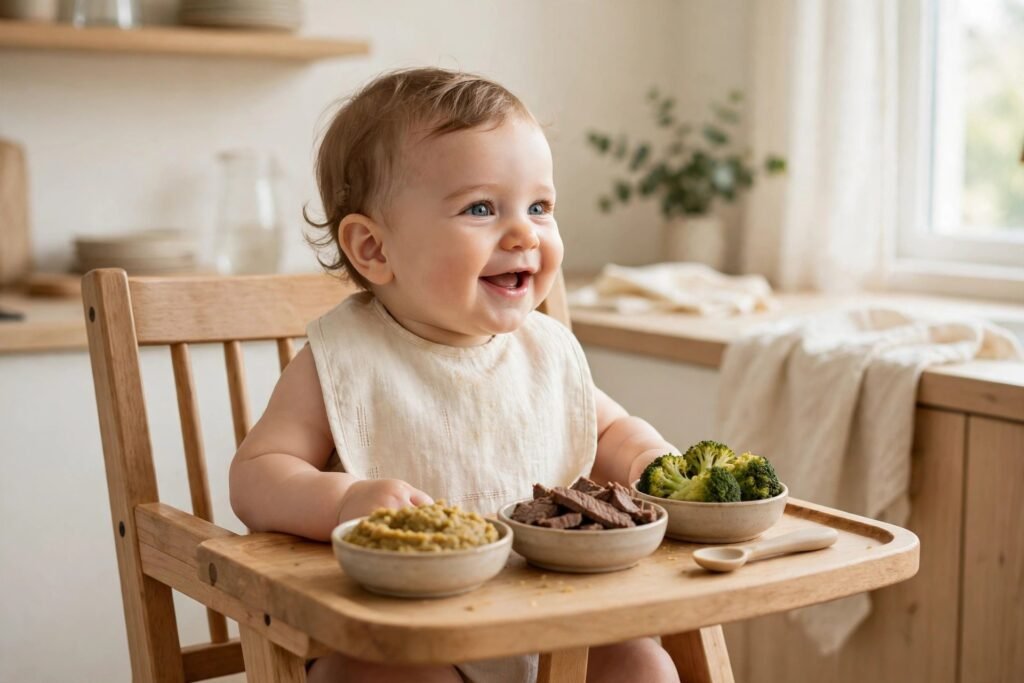
This is the non-negotiable one. Eating safely means sitting upright in a high chair or feeding seat, staying there without slumping sideways or folding forward. A baby who slides down in the seat can’t coordinate swallowing well, and posture is part of choking prevention, not just comfort. A baby who can’t sit steadily isn’t showing that a baby is ready for solids yet, whatever their age.
The NHS guide to your baby’s first solid foods boils its readiness check down to three signs, and staying in a sitting position with the head held steady is the first of them.
Sign 2: Head and neck control is solid
Closely related, and worth checking separately: your baby holds their head steady and upright without it wobbling or flopping to one side. The CDC lists controlling the head and neck as a core readiness sign, because that control is what lets a baby move food around the mouth and swallow it deliberately, and turn away when they’ve had enough. Steady head control is one of the clearest signals that a baby is ready for solids.
Sign 3: Food stays in instead of sliding straight back out
Young babies have a tongue-thrust reflex: anything thicker than milk gets pushed out with the tongue, automatically. It’s a protective reflex, and it fades as they get ready for food. When that reflex fades and food stays in, it’s one of the clearest signs your baby is ready for solids.
The AAP’s HealthyChildren.org guide to starting solid foods describes the test well. If you offer a spoon and most of it dribbles down the chin, your baby probably can’t yet move food to the back of the mouth to swallow it. The AAP’s advice in that case is simple: thin the food out, wait a week or two, and try again. That’s not failure. It’s the normal sequence.
Sign 4: Hands bring things to the mouth on purpose
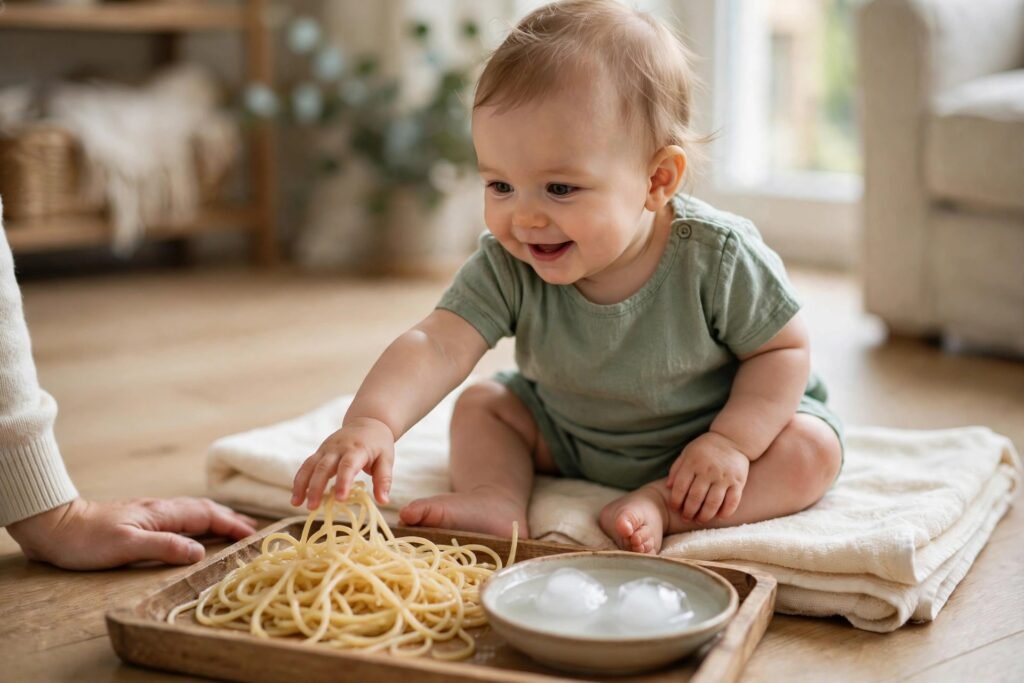
Watch for deliberate hand-to-mouth traffic: your baby grabs a toy, a teether, a fistful of your shirt, and lands it in the mouth. The CDC includes bringing objects to the mouth and trying to grasp small objects, like food, among its readiness signs. That coordination (eyes, hand, mouth working together) is the same skill set your baby is about to use on a piece of steamed broccoli.
Sign 5: They open up when food comes their way
Interest counts, as long as it arrives with the physical signs above. Opening the mouth when a spoon approaches, leaning in, watching intently and reaching for food, the AAP lists these as signs a baby seems eager to be fed. Interest plus posture plus swallowing: that’s the combination you’re waiting for.
Save this: the baby is ready for solids checklist
Screenshot this and tick them off over a week or two. You’re looking for most of these, most of the time:
- ☐ Around 6 months old (and not before 4 months)
- ☐ Sits up alone or with a little support, without slumping
- ☐ Holds head and neck steady and upright
- ☐ Swallows a spoonful instead of pushing it straight back out
- ☐ Brings toys and objects to the mouth on purpose
- ☐ Grasps at small things, like food on the tray
- ☐ Opens mouth and leans in when food is offered
Not on the list, whatever the internet says: having teeth, sleeping badly, chewing fists, or hitting a particular weight.
The false alarms
Some classic “signs” aren’t signs at all:
- Chewing fists. Babies chew their hands for months for all kinds of reasons: discovery, soothing, teething. It tells you almost nothing about whether your baby is ready for solids on its own.
- Waking more at night. Sleep goes sideways for lots of reasons at this age. A rough week of nights is not a nutritional diagnosis.
- Seeming hungrier. Growth spurts make babies feed more often, then settle. Extra hunger for a few days doesn’t mean milk has stopped being enough.
- Doubling birth weight. The AAP mentions that babies may be ready around the time they’ve doubled their birth weight (often about 13 pounds or more), but treat that as background context. A big baby who can’t sit steadily still isn’t ready.
Try the two-minute kitchen test
When you think you’re close, do a low-pressure trial:
- Sit your baby upright in the high chair after a normal milk feed, when they’re alert and not tired or ravenous.
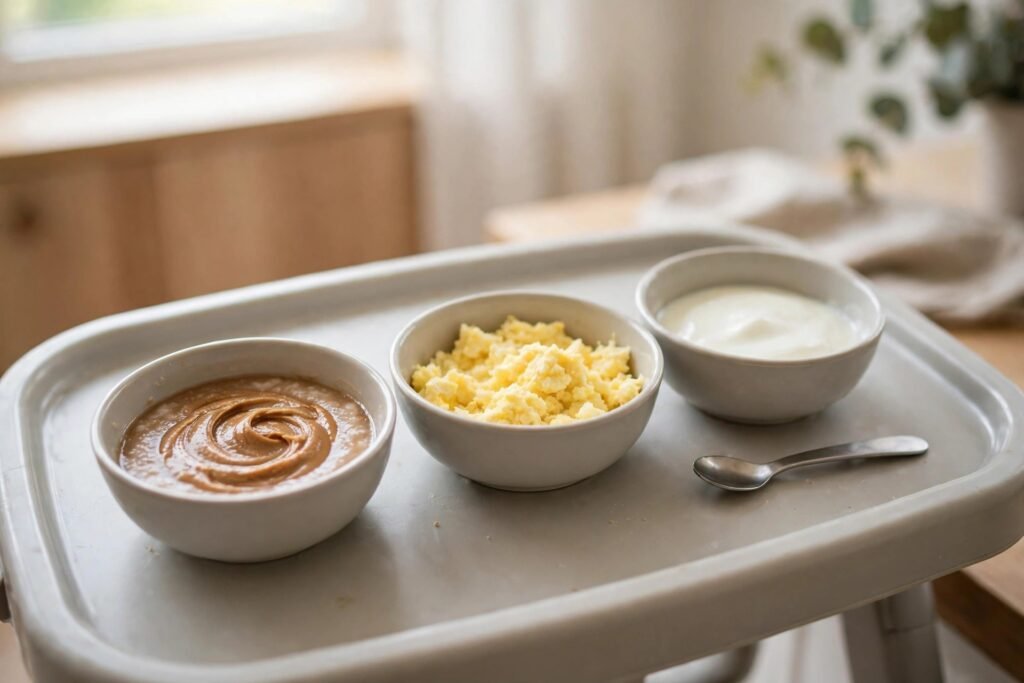
- Offer a teaspoon of something smooth and runny, a familiar-flavored purée or infant cereal thinned with breast milk or formula.
- Watch what happens. Food moved around and swallowed, even messily? Good. Food pushed straight back out, tears, or a baby who slumps in the seat? Also useful information: stop, and retry in a week or two.
Expect mess either way. Expect tiny amounts. A teaspoon or two is a genuine start, and milk is still the main source of nutrition at this stage. A swallowed spoonful is the kitchen-table proof that your baby is ready for solids.
Your baby is ready. Now what?
Once the signs say your baby is ready for solids, a few ground rules from the CDC and AAP make the first weeks calmer:
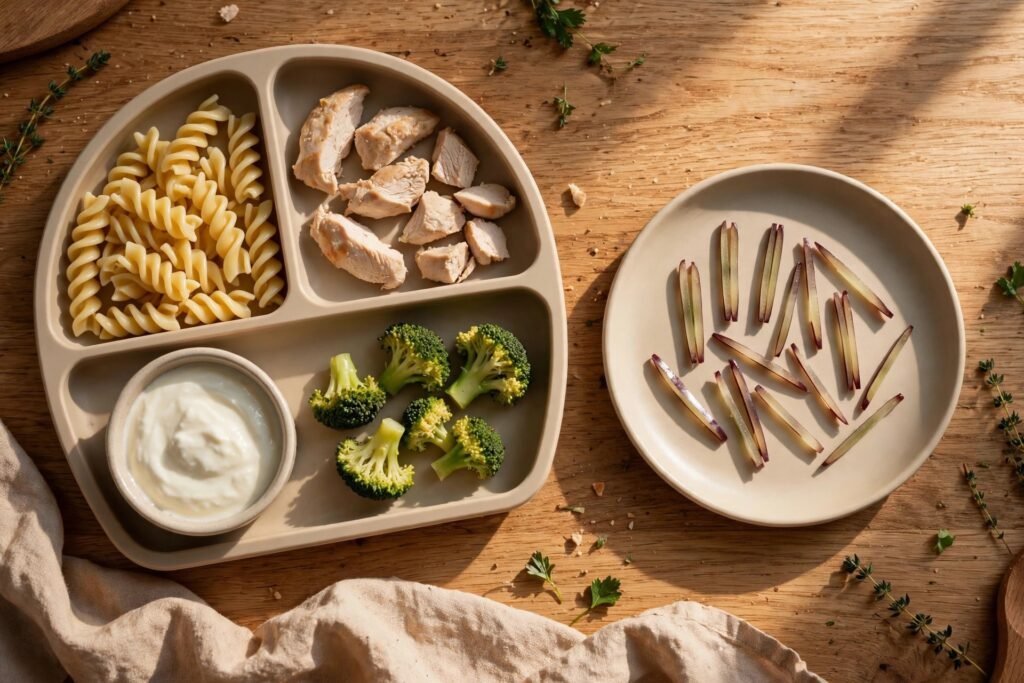
- There’s no required order of first foods. The AAP says most babies don’t need foods introduced in a specific sequence. Vegetables, fruits, meats and other proteins, plain yogurts and cheeses, and whole grains like fortified infant cereal can all be in the early mix.
- One new food at a time, at first. Offer a single-ingredient food, then wait 3 to 5 days before the next new one, so any reaction is easy to trace back.
- Don’t delay the allergens. Potentially allergenic foods: egg, peanut (as thinned nut butter, never a spoonful of the thick stuff), wheat, shellfish, can be introduced alongside other foods rather than held back. If your baby has severe eczema or a known egg allergy, ask your pediatrician about peanut timing specifically.
- Milk is still the main drink. Cow’s milk and fortified dairy alternatives shouldn’t replace breast milk or formula as a drink until after 12 months, and honey is off the menu until after the first birthday too.
- Expect some gagging. It’s startling and usually normal, and it helps to know the difference between gagging and choking before the first spoonful, not during it.
Once your baby is eating happily, simple blends like these easy smoothie recipes for babies at 6 months can widen the flavors on offer without added sugar. Next, see the first foods chart: what to serve at 6, 9 and 12 months.
When to check with your pediatrician first
Pause and ask before starting if your baby was born prematurely (the NHS advises checking timing with your doctor in that case), has reflux or a known food allergy, has eczema that’s moderate to severe, or isn’t meeting developmental milestones in other areas, like head control or rolling. A two-minute conversation at the next check-up beats weeks of second-guessing yourself at the high chair.
Quick answers
Can I start at 4 months if my baby seems interested? Guidance from the CDC and AAP says no, before 4 months is not recommended, and interest alone isn’t a readiness sign. The physical signs that show a baby is ready for solids need to be there too.
My baby pushed everything out. Did I miss the window? No. You found real information: the tongue-thrust reflex is still strong. Keep up normal milk feeds and try again in a week or two.
Does my baby need to have teeth first? No. Babies gum soft foods very effectively. Teeth are not on the list of signs that a baby is ready for solids.