Medical disclaimer: This article is general information for parents and is not medical advice. Guidance on feeding, health and development can depend on your baby’s individual needs. If you have concerns about your child, please speak to your pediatrician or another qualified health professional.
“When can babies start baby food?” is usually asked two ways at once: at what age, and how will I know they are ready? The answer from both the CDC and the American Academy of Pediatrics (AAP) is the same: at about 6 months, when your baby shows the developmental signs of readiness, and not before 4 months. Age alone is not the test; readiness is.
Table of Contents
Timing: about 6 months, once the signs are there
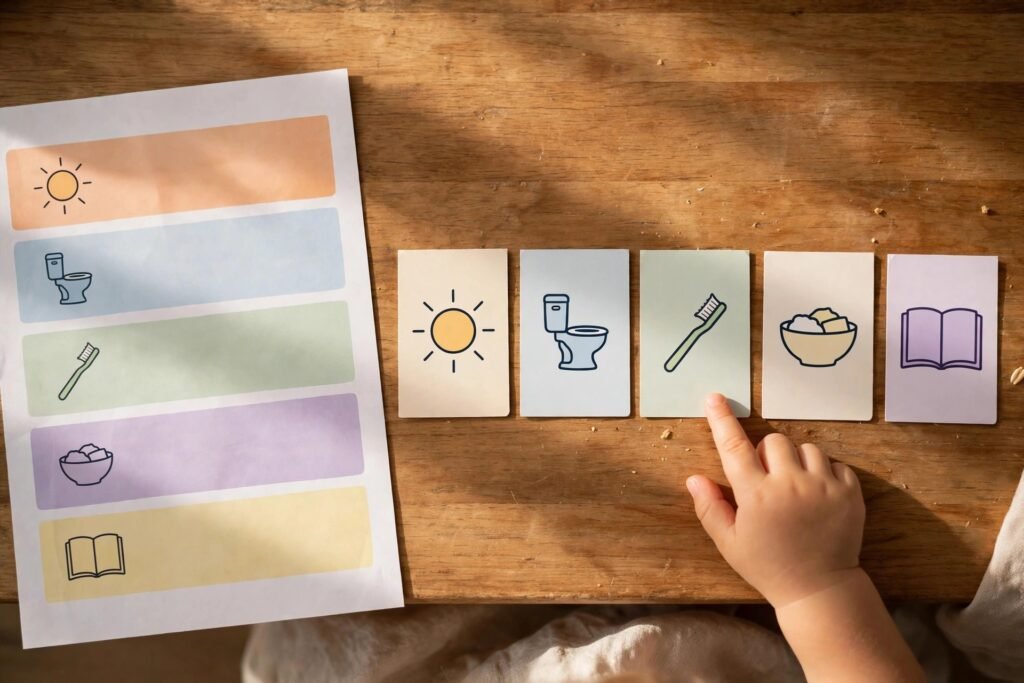
The CDC lists these signs that a baby can begin foods other than breast milk or formula (our Signs Your Baby Is Ready for Solids checklist walks through each one in detail; this guide focuses on what to do once they appear):
- Sits up alone or with support
- Controls their head and neck, steady, not wobbling
- Opens their mouth when food is offered
- Swallows food rather than pushing it back out onto their chin (the tongue-thrust reflex fading is part of readiness, it does not disappear completely, it matures)
- Brings objects to their mouth
- Tries to grasp small objects, such as food or toys
- Moves food from the front to the back of the tongue to swallow
Watching you eat with great interest is a lovely sign of curiosity, but on its own it is not enough, look for the physical skills above as well. If your baby was born early, or has any developmental or medical condition, ask your pediatrician about timing, because adjusted age and individual advice matter.
Breast milk or formula stays central: solids are complementary foods, added alongside milk, and the CDC and AAP recommend continuing breastfeeding while introducing solids.
What to serve first
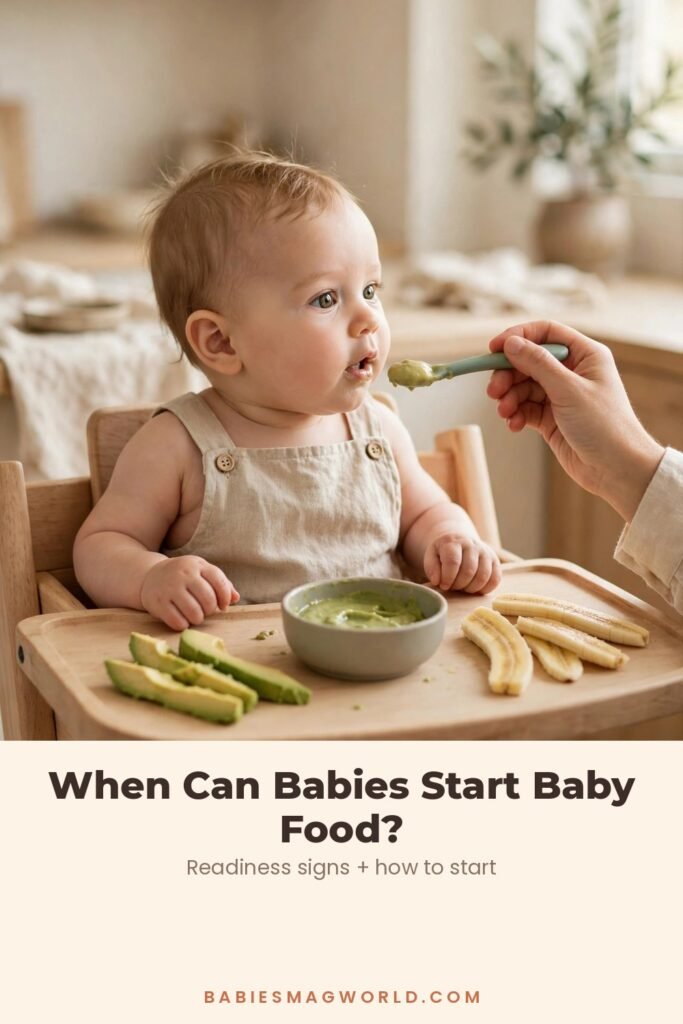
Once your baby is ready, the next question is what goes on the spoon. There is no required order. The AAP, via the CDC, notes that for most children you do not need to introduce foods in a particular sequence. Sensible first foods include:
- Fortified infant cereals, offer a variety (oat, barley, multigrain), not only rice cereal; the CDC notes that feeding only rice cereal can increase arsenic exposure
- Vegetables and fruits, cooked until soft and mashed or puréed: sweet potato, carrot, peas, apple, pear, banana, avocado
- Meat and other proteins, well cooked and puréed or finely shredded. These help with iron, which matters from around 6 months
- Plain yogurt and cheese without added sugars (pasteurized)
- Beans and lentils, cooked soft and mashed
How to introduce: let your baby try one single-ingredient food at a time at first, and wait 3 to 5 days before the next new food, as the CDC advises. That spacing is what lets you spot which food is responsible if there is a reaction. Start with a spoonful or two, once a day, and build up gradually by appetite. There is no target amount your baby “should” finish. Serve food in a dish rather than feeding straight from a jar, so saliva from the spoon does not spoil the rest.
For an easy way to serve fruit and vegetable purées, see our smoothie recipes for babies at 6 months. See the first foods chart by age.
Allergens: do not delay peanut, egg and the rest
Current guidance has reversed the old “wait as long as possible” advice. The CDC advises introducing potentially allergenic foods, egg, peanut, tree nuts, fish, shellfish, soy, wheat and sesame, when you introduce other foods, in forms your baby can safely eat: For most babies, allergens start at the same time as other foods, not later.
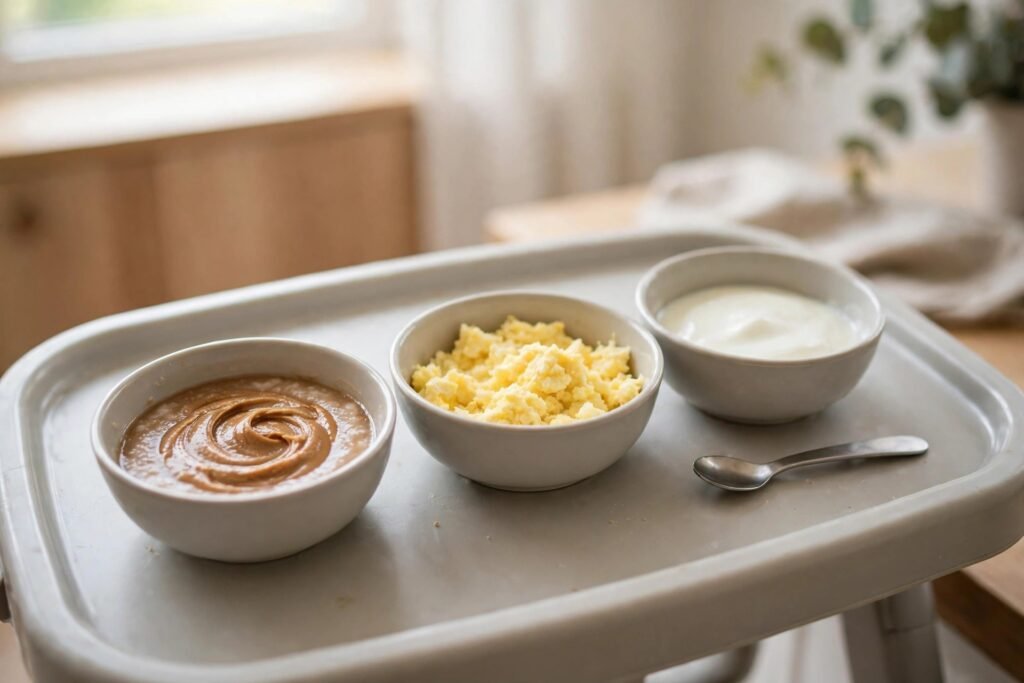
- Peanut: smooth peanut butter thinned with water, breast milk or formula, or stirred into a purée. Never whole peanuts or thick spoonfuls: choking hazard.
- Egg: well-cooked (hard-boiled or scrambled until set), mashed or finely chopped.
- One at a time, with the same 3-to-5-day watchfulness as other new foods. Watch for rash, hives, swelling, vomiting or breathing difficulty; breathing difficulty or swelling of the lips/tongue is an emergency.
Higher-risk babies: if your baby has severe eczema and/or an egg allergy, talk to your pediatrician early, ideally by the 2- or 4-month check-up. AAP-endorsed NIAID guidance may recommend introducing peanut between 4 and 6 months for this group, sometimes after testing, and that decision belongs with your doctor, not a website.
Foods and drinks to avoid or limit in the first year
From the CDC’s guidance on foods and drinks to avoid or limit:
- Honey, none before 12 months, including in cooked food, because it can contain bacteria that cause infant botulism
- Cow’s milk as a drink, not before 12 months, and the same applies to plant-based milk drinks as a main drink; milk in cooking and yogurt/cheese as foods are fine
- Fruit juice, not before 12 months, including 100% juice
- Fish high in mercury, avoid king mackerel, marlin, orange roughy, shark, swordfish, tilefish (Gulf of Mexico) and bigeye tuna (CDC avoid-or-limit list).
- Added sugars and added salt, avoid; check labels on packaged baby foods
- Unpasteurized milk, cheese and juice
- Caffeinated drinks, tea, coffee, energy drinks are not for babies
Choking: the hazard is shape and texture, not just the food
The CDC’s choking guidance is the part of starting solids that deserves the most care: Timing gets the attention; preparation matters more.
- Always supervise eating, with your baby sitting upright in a highchair, never eating on the move, in a car seat at an angle, or while laughing/crying with food in their mouth
- Prepare food to a safe texture: soft enough to mash between your fingers at first; cook hard vegetables and fruits (such as raw carrot and apple) until soft
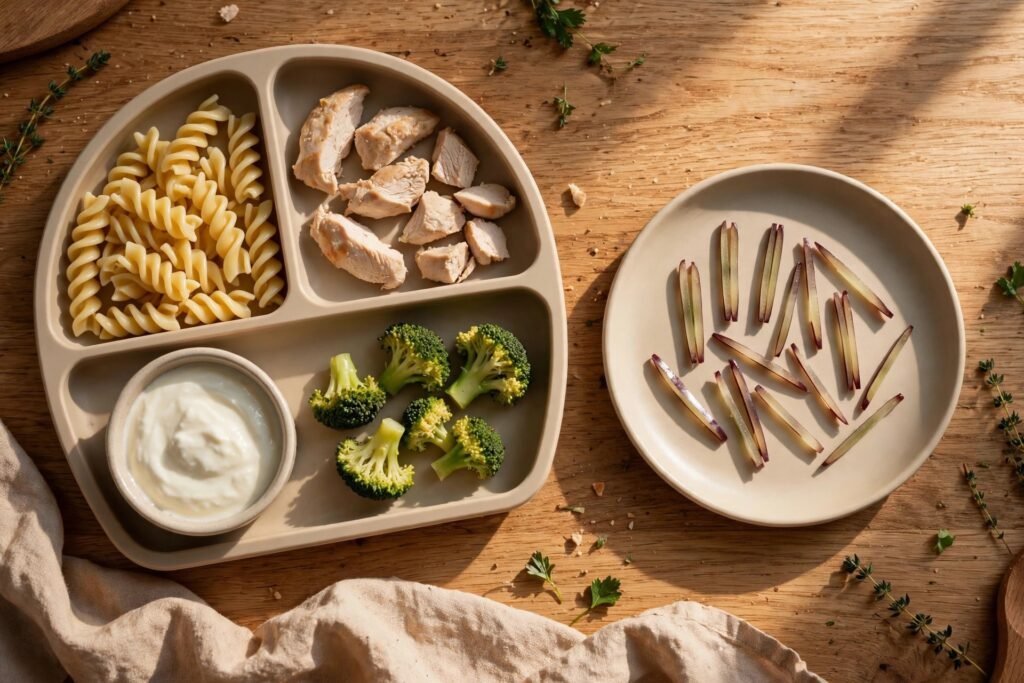
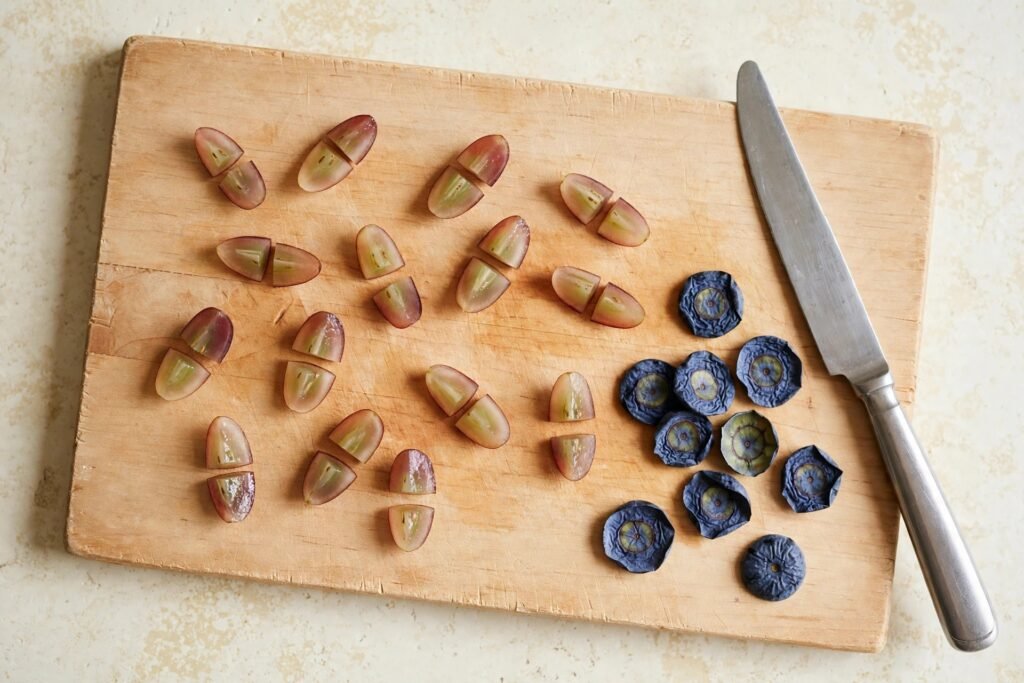
- Cut round foods lengthwise into quarters, grapes, cherry tomatoes and similar foods should never be served whole to babies and young toddlers. See how to cut grapes, blueberries and other round foods safely.
- Avoid whole nuts, popcorn, whole grapes, chunks of meat or cheese, marshmallows, hard candy, and thick spoonfuls of nut butter
- Learn what to do if a baby chokes. A local infant first aid/CPR class is worth it for any parent starting solids
Full CDC list: https://www.cdc.gov/infant-toddler-nutrition/foods-and-drinks/choking-hazards.html
How textures progress
- Around 6 months: smooth or mashed foods that are easy to swallow
- Around 7–8 months: a wider variety from all food groups, with thicker, lumpier textures as your baby manages them
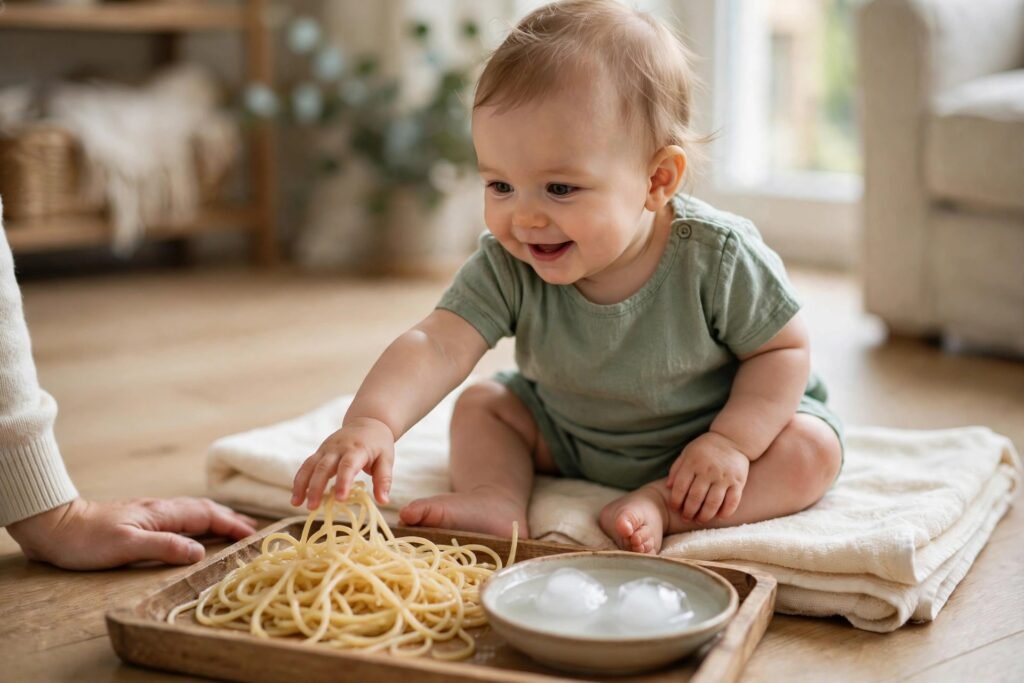
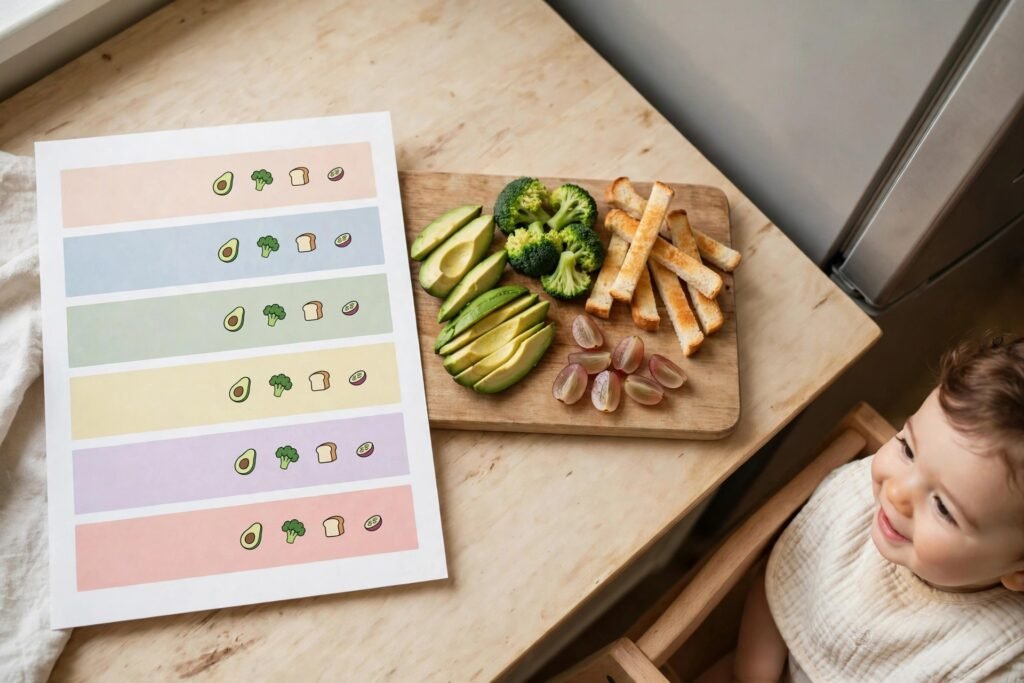
- From around 8 to 10 months, when ready: soft finger foods your baby can pick up, strips of soft fruit, well-cooked vegetable sticks, soft pasta pieces, strips of toast, always supervised, always soft enough to gum
Starting is only the first step; textures keep moving for months afterward.
Progression is led by your baby, not the calendar. Gagging (noisy, with coughing and pushing food forward) is a normal part of learning and is different from choking (silent or struggling to breathe), which needs immediate action.
Mealtime habits that help
- Follow your baby’s cues. Turning away, closing the mouth or pushing food away means “enough”. Do not coax or force extra spoonfuls. Putting cereal in a bottle does not help babies sleep longer and increases choking risk, per the CDC.
- Expect mess and repetition. A food refused today may be accepted after being offered again on other days, without pressure.
- Keep it hygienic: wash hands, utensils and surfaces; refrigerate leftovers promptly, serve portions into a dish, and throw away food left on your baby’s plate after the meal. For the mess itself, see a changing pad that makes weaning clean-ups easier.
When to talk to your pediatrician
Ask for advice if your baby is not showing readiness signs well after 6 months, struggles to swallow or coughs and splutters at most feeds, has a suspected food reaction, has severe eczema (see the allergen note above), was born prematurely, or if you are ever unsure. Starting solids is a milestone, not a race. A short delay to get the timing right for your baby is fine. If the timing still isn’t clear for your baby, that question is exactly what a check-up is for.
Sources
- CDC, When, What, and How to Introduce Solid Foods: https://www.cdc.gov/infant-toddler-nutrition/foods-and-drinks/when-what-and-how-to-introduce-solid-foods.html
- CDC, Foods and Drinks to Avoid or Limit: https://www.cdc.gov/infant-toddler-nutrition/foods-and-drinks/foods-and-drinks-to-avoid-or-limit.html
- CDC, Choking Hazards: https://www.cdc.gov/infant-toddler-nutrition/foods-and-drinks/choking-hazards.html
- CDC, Infant and Toddler Nutrition FAQs: https://www.cdc.gov/infant-toddler-nutrition/faqs/index.html
- American Academy of Pediatrics (HealthyChildren.org), Starting Solid Foods: https://www.healthychildren.org/English/ages-stages/baby/feeding-nutrition/Pages/Starting-Solid-Foods.aspx
- American Academy of Pediatrics (HealthyChildren.org), Peanut Allergy: What to Know About the Latest Prevention Guidelines: https://www.healthychildren.org/English/health-issues/conditions/allergies-asthma/Pages/Peanut-Allergies-What-You-Should-Know-About-the-Latest-Research.aspx
- NHS, Your baby’s first solid foods / weaning guidance: https://www.nhs.uk/best-start-in-life/baby/weaning/