Medical disclaimer: This article is general information for parents and is not medical advice. Guidance on feeding, health and development can depend on your baby’s individual needs. If you have concerns about your child, please speak to your pediatrician or another qualified health professional.
Around six months, most babies are ready to start foods alongside breast milk or formula. Smoothies for babies are really just smooth purées with a drinkable consistency: fruit, vegetables, grains or yogurt blended with a little breast milk, formula or water. Made well, it is an easy way to offer new flavors and textures. Made carelessly, it can crowd out milk feeds or include ingredients that are not suitable yet. This guide keeps it simple and follows current CDC and American Academy of Pediatrics (AAP) guidance.
Table of Contents
First, is your baby ready for spoon foods?
Smoothies are a starting-solids food, so the same readiness signs apply. The CDC lists signs such as: your baby can sit with support, holds their head and neck steady, opens their mouth when food is offered, swallows food instead of pushing it back out, and brings objects to their mouth. If your baby is not there yet, wait and try again in a week or so. For the full checklist, see our guide to when babies can start baby food. The same signs decide readiness for smoothies for babies as for any first food. When in doubt, check the signs your baby is ready for solids
What should go in smoothies for babies?
The base. Use breast milk, formula or a little water. Do not use cow’s milk or plant-based milk drinks (such as almond, oat or soy drinks) as the main liquid before 12 months. The CDC advises that cow’s milk and fortified dairy alternatives are not recommended as a drink until after the first birthday. To be clear:
- Cow’s milk as a drink: no, before 12 months. Small amounts of pasteurized yogurt and cheese without added sugars are fine as foods from about 6 months, so a spoonful of plain yogurt in a smoothie is acceptable.
- Whole nuts: never. They are a choking hazard. But smooth peanut butter thinned and stirred into a purée is different, current AAP-endorsed guidance supports introducing peanut in an age-appropriate form from around 6 months (see “Allergens” below). The danger is the whole nut or a thick spoonful, not peanut in a safe texture.
- Plant milk drinks are not a substitute for breast milk or formula in the first year, whether or not your baby has a dairy allergy. If you suspect a cow’s milk allergy, speak to your pediatrician rather than swapping to a plant drink on your own.
Good starter ingredients (all soft or cooked until soft, and blended smooth): banana, avocado, cooked apple, pear, peach, mango, blueberries (blended smooth at this stage), cooked sweet potato, cooked carrot, and baby oatmeal or fortified infant cereal. Around six months babies also need iron-rich foods in their diet overall, fortified infant cereals, meats and beans are the usual sources, according to the CDC, so treat smoothies for babies as one part of the day’s food, not the whole menu. See our guide to iron-rich first foods for babies.
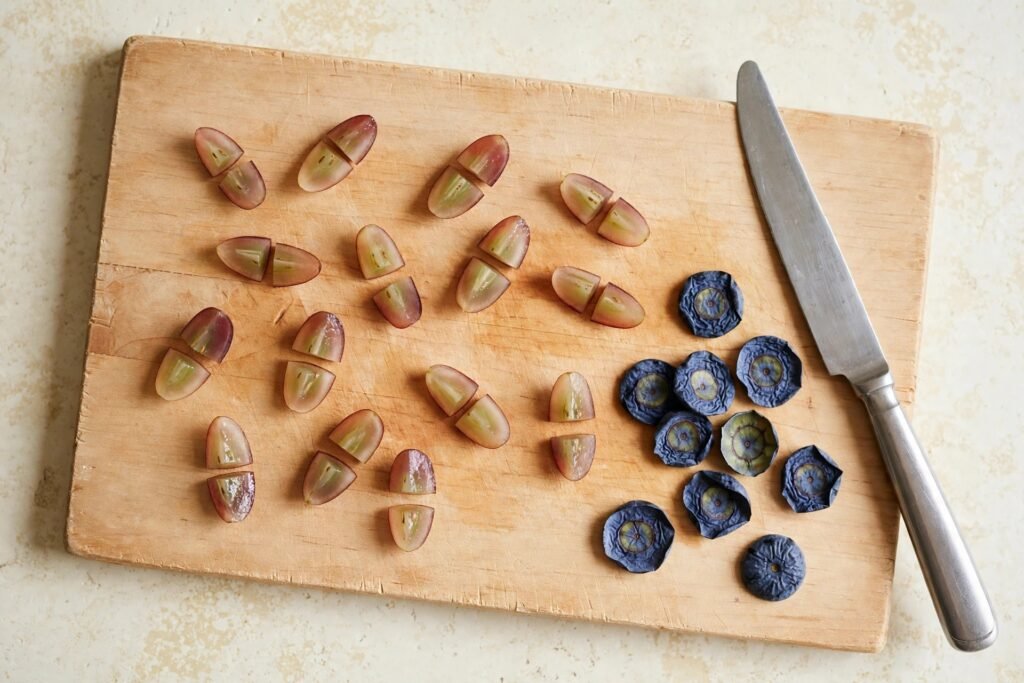
Leave out: honey (never before 12 months, because of the risk of infant botulism), added sugar, salt, juice, raw hard pieces of fruit or vegetable, and anything round and firm, such as whole grapes or whole nuts, which are choking hazards.
Four simple starter recipes
Start these smoothies for babies with one or two ingredients each, so you can spot any reaction, and add new foods one at a time (the CDC suggests waiting 3 to 5 days between new foods at first).
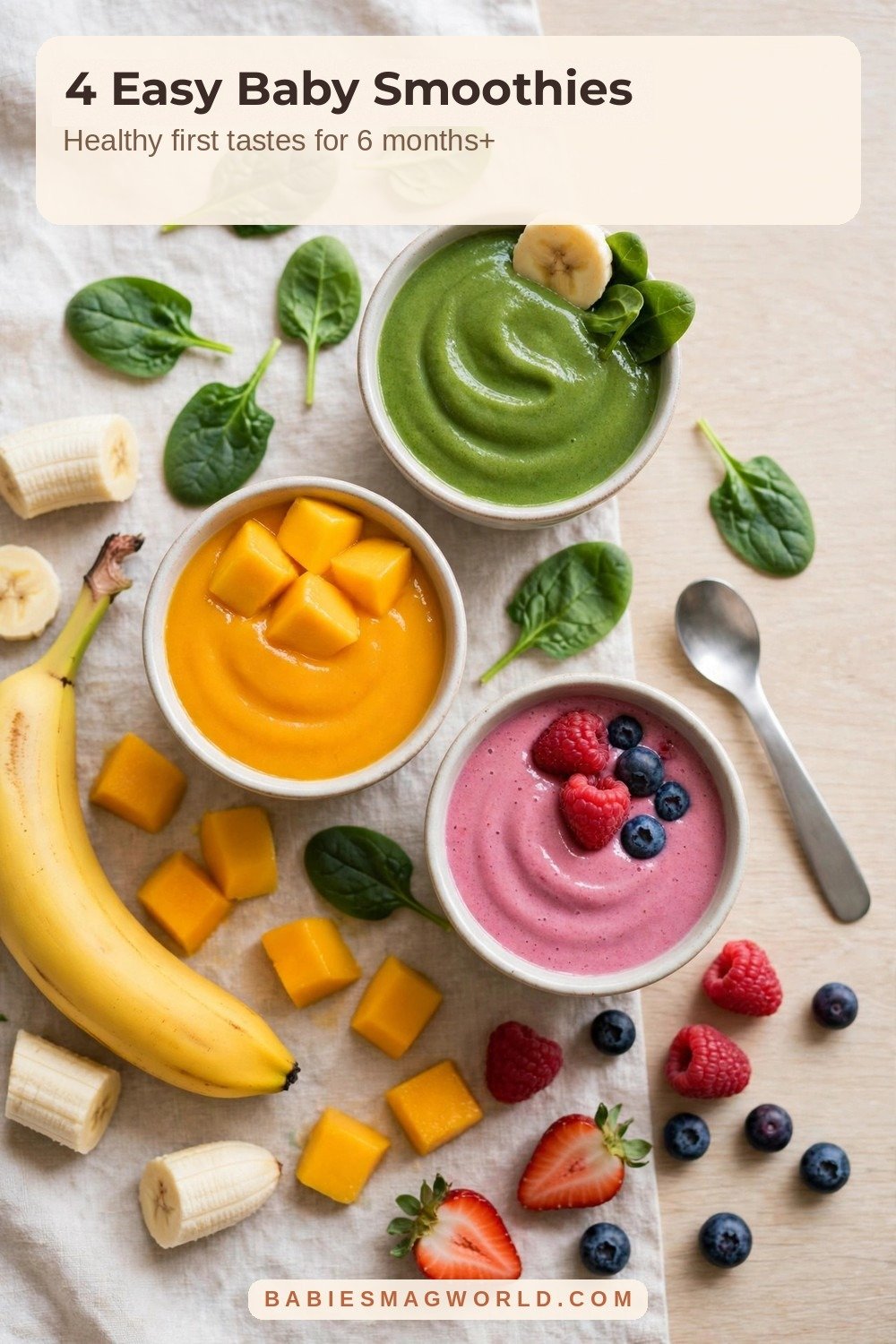
- Banana and oat: half a ripe banana, 1 tablespoon of cooked baby oatmeal, blended with breast milk, formula or water to a smooth, spoonable consistency.
- Avocado and pear: quarter of a ripe avocado and half a soft, ripe pear, blended smooth.
- Cooked apple and banana: half an apple, cooked until soft and cooled, blended with half a banana.
- Mango and yogurt: a few spoonfuls of ripe mango blended with 1–2 tablespoons of plain, unsweetened pasteurized yogurt.
Blend until completely smooth at first. As the weeks pass and your baby handles texture well, blend a little less so the purée is thicker and slightly lumpier. Gradually moving on is part of learning to eat.
How to serve smoothies for babies
- Offer smoothies by spoon, or in a small open cup with your help, not in a bottle. Babies should be sitting upright, ideally in a highchair with straps fastened, and always supervised while eating.
- Start with a few spoonfuls once a day and follow your baby’s cues. If they turn away, close their mouth or push the spoon away, stop. Milk (breast milk or formula) remains the main source of nutrition through the first year; solids are added to it, not swapped in for it.
- Serve freshly made where you can. If you make extra, refrigerate it promptly in a clean, sealed container and use it within a day, or freeze it in small portions. Do not re-serve food that has already been in contact with your baby’s spoon and mouth.
Allergens: introducing peanut, egg and other common allergens
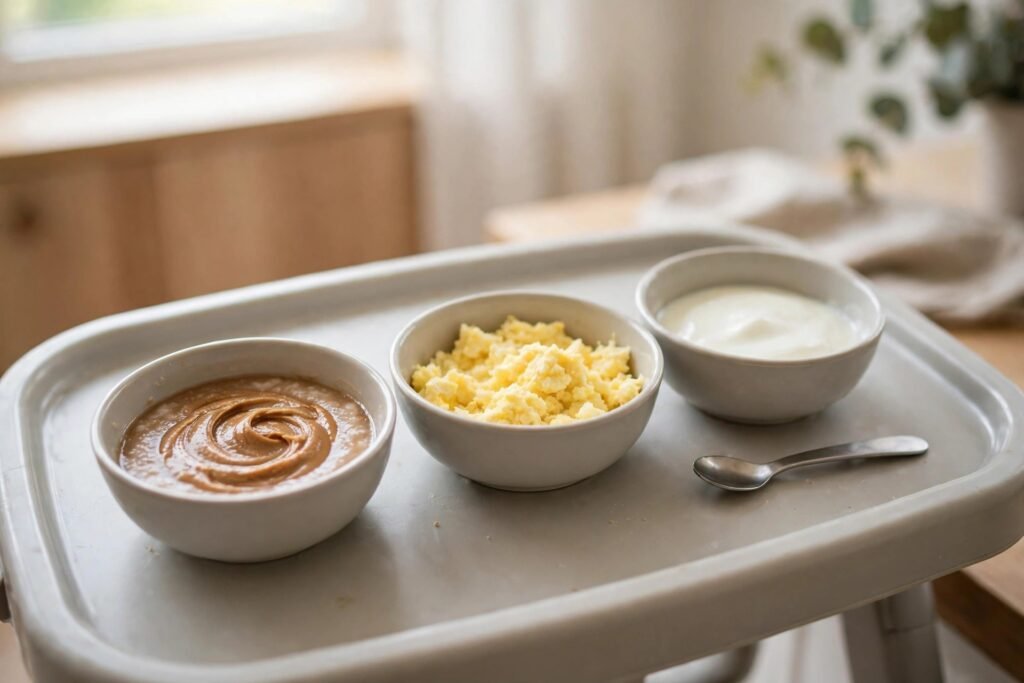
The CDC advises introducing potentially allergenic foods, such as egg, peanut, fish, shellfish, soy, wheat, sesame and tree nuts, when you introduce other foods, rather than delaying them. Smoothies for babies are an easy vehicle for some of them, in safe forms:
- Peanut: stir a small amount of smooth peanut butter, thinned with warm water, breast milk or formula, into a fruit or cereal purée. Never offer whole peanuts or thick spoonfuls of peanut butter, which can choke.
- Egg: use well-cooked egg, finely mashed or blended into a purée, not raw or runny.
- Introduce one allergen at a time and watch for reactions such as a rash, swelling, vomiting or breathing difficulty. Breathing difficulty or swelling of the lips or tongue needs emergency help straight away.
- Important exception: babies with severe eczema and/or an existing egg allergy are at higher risk of peanut allergy. The AAP supports the NIAID guidance that these babies may need to try peanut earlier (around 4 to 6 months) and should be discussed with their doctor first, so raise it at your next check-up rather than following a general article.
Common questions
Can my baby have a smoothie every day? Smoothies for babies can be part of the rotation, but variety matters more than any single recipe. Across the day and week, aim for different food groups: vegetables, fruits, grains, proteins and dairy foods without added sugars, as the CDC recommends for babies from about 7 to 8 months.
Can I put it in a bottle or a pouch for convenience? Serve it by spoon or cup at the table where you can. Eating is a skill babies are learning, and sucking purées from bottles or pouches all day skips the chewing and swallowing practice that thicker textures provide, and makes it harder to notice when your baby is full. That is why smoothies for babies belong at the table, in a spoon or cup, not in a bottle carried around.
Store-bought baby smoothies: are they okay? They can be convenient. Check the label for added sugars and skip products sweetened with juice concentrates where you can. Homemade gives you full control of ingredients, but a plain, unsweetened store-bought purée is a reasonable backup. Whether homemade or store-bought, smoothies for babies should be plain and unsweetened at this age.
The bottom line
Think of smoothies for babies as drinkable purées: soft fruit or vegetables, a safe liquid base, no honey and no added sugar, served by spoon to a baby who is ready for solids. Keep milk feeds central, introduce allergens carefully and in safe textures, and let your baby set the pace.
Sources
- CDC, When, What, and How to Introduce Solid Foods: https://www.cdc.gov/infant-toddler-nutrition/foods-and-drinks/when-what-and-how-to-introduce-solid-foods.html
- CDC, Foods and Drinks to Avoid or Limit: https://www.cdc.gov/infant-toddler-nutrition/foods-and-drinks/foods-and-drinks-to-avoid-or-limit.html
- CDC, Choking Hazards: https://www.cdc.gov/infant-toddler-nutrition/foods-and-drinks/choking-hazards.html
- American Academy of Pediatrics (HealthyChildren.org), Starting Solid Foods: https://www.healthychildren.org/English/ages-stages/baby/feeding-nutrition/Pages/Starting-Solid-Foods.aspx
- American Academy of Pediatrics (HealthyChildren.org), Peanut Allergy: What to Know About the Latest Prevention Guidelines: https://www.healthychildren.org/English/health-issues/conditions/allergies-asthma/Pages/Peanut-Allergies-What-You-Should-Know-About-the-Latest-Research.aspx