Medical disclaimer: This article is general information for parents and is not medical advice. Guidance on feeding, health and development can depend on your baby’s individual needs. If you have concerns about your child, please speak to your pediatrician or another qualified health professional.
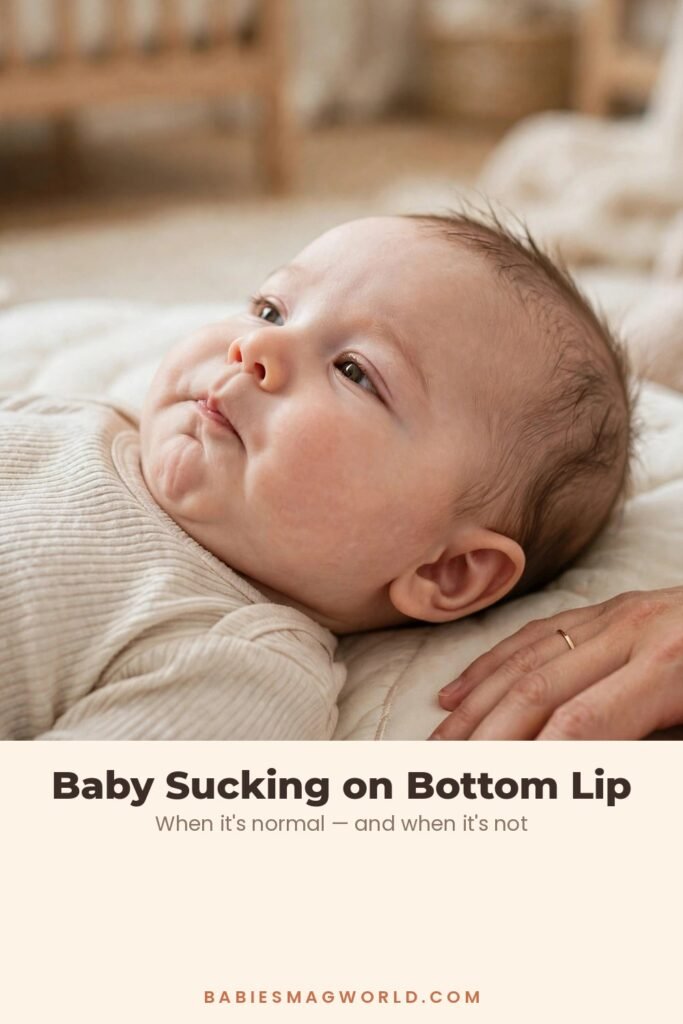
It is a small thing you suddenly notice all day: your baby pulls their bottom lip in and sucks on it, sometimes with a soft smacking sound, sometimes while staring thoughtfully at the room. It looks like a habit forming, and it is natural to wonder whether it means something is wrong.
In most cases, baby sucking on bottom lip is a normal part of how babies comfort themselves and explore. This article explains the usual reasons, what you can do about sore skin, and the smaller number of situations where it is worth getting checked.
Table of Contents
Baby sucking on bottom lip: the short answer
Most parents end up searching “baby sucking on bottom lip” at some point, and in most cases, what they are seeing is normal. Babies are wired to suck. Sucking is one of the earliest ways a baby calms down, and the mouth is one of the main ways a young baby explores the world. A baby who sucks their bottom lip is usually doing one or more of these things: soothing themselves, getting ready for a feed, or coping with sore gums. It most often appears in the first six months and tends to fade as babies find other things to chew, hold and babble with.
Common reasons babies suck their bottom lip
1. Self-soothing and comfort
Sucking is calming for babies. It is the same instinct behind feeding, thumb-sucking and pacifier use. Many babies suck their lip when they are tired, overstimulated or drifting off to sleep. If your baby does it mostly at those moments, comfort is the most likely explanation. For many babies, this is the main story behind baby sucking on bottom lip.
2. Exploring with their mouth
Young babies learn about textures and about their own bodies by mouthing things, their fists, toys, and sometimes their own lip. Lip sucking can simply be your baby discovering a body part they can now control. This kind of exploration is expected in the first months. The same story explains why babies chew on their hands.
3. A hunger cue
Lip smacking, bringing hands to the mouth and turning the head searching for a feed (rooting) are all early hunger cues. The AAP’s HealthyChildren.org guide to responsive feeding lists rooting, lip-smacking, hands to the mouth and sucking motions among the early signs that a baby is hungry. If the lip sucking shows up around feed times and stops once your baby has fed, hunger was probably the message. If the lip sucking is showing up alongside the other signs of readiness for food, you may be closer to first tastes than you think. See our smoothie recipes for babies at 6 months.
4. Teething discomfort
When teeth are on the move, babies chew and press on their gums for relief. The NHS lists increased chewing, drooling and sore, red gums among the common signs of teething, and the first teeth usually arrive from around six months (the lower front teeth are often first). Sucking or pressing the bottom lip over the gum fits that picture. For the full picture of timing and readiness, see when babies can start baby food after 6 months. For more on what helps, see the teething guidance in our sources below. If nights are broken too, see sleep regression or teething.
5. Copying faces
Older babies spend a lot of time studying faces and practicing the movements they see. A baby who watches people talk, smile and bite their lips may experiment with the same movements. This is a normal part of social development and play.
Is it harmful?
For most babies, no. Occasional or frequent baby sucking on bottom lip in the first year is not, by itself, a sign of a problem, and it usually passes on its own. Two practical things are worth watching:
- The skin around the mouth. Constant moisture and friction can leave the lip and chin red, dry or chapped. Keep the area clean and dry, pat drool away gently, and if the skin becomes cracked, blistered or weepy, ask your pediatrician or pharmacist what is safe to use on it rather than applying adult lip products.
- Feeding and growth. Lip sucking that sits alongside poor feeding, fewer wet diapers than usual, or slow weight gain is a different picture from a contented baby with a comfort habit. Mention it at your next visit, or sooner if you are worried.
If a strong sucking habit (lip, thumb or pacifier) is still going strong well into the toddler and preschool years, raise it with your child’s dentist. That is a “mention it at a check-up” issue, not an emergency.
What you can do
You do not need to stop baby sucking on bottom lip in a young baby, and scolding or pulling the lip out does not help. Instead, respond to what is probably behind it:
- If it might be hunger, offer a feed and note the pattern for a few days.
- If it looks like teething, offer a clean teething ring. The NHS suggests a chilled (not frozen) teething ring can soothe sore gums. Keep anything you offer clean, and avoid teething remedies you have not checked are suitable for your baby’s age. Skip teething gels, homeopathic teething tablets and amber teething necklaces. The AAP warns gels can be toxic to babies’ blood, the tablets have contained harmful ingredients, and the necklaces are a choking and strangulation risk.
- If it is comfort, offer the comfort directly: holding, rocking, a pacifier if your family uses one, or a familiar blanket at sleep time (following safe sleep guidance for your baby’s age).
- If your baby is awake and curious, offer something safe to mouth and explore, such as a clean, age-appropriate teething toy, and some face-to-face play and talking.
- Protect the skin: gently dab drool away during the day and keep the lip area dry, especially in cold or windy weather.
When to see a pediatrician
Most baby sucking on bottom lip never reaches this point.
Book an appointment, or call sooner if symptoms are severe, if you notice any of the following:
- Sores, blisters, swelling or a rash on or around the lips that does not heal, gets worse, or keeps coming back
- Cuts or bleeding on the lip
- Your baby is feeding poorly, refusing feeds, or seems in pain when feeding
- Fewer wet or dirty diapers than usual, unusual sleepiness, or concerns about weight gain
- Fever in a baby under 3 months, or any fever that worries you at any age
- The lip sucking starts suddenly alongside other changes that concern you, such as your baby seeming unwell, unusually irritable, or not responding as they usually do
- You are simply worried. That is always a good enough reason to ask
The bottom line
A baby sucking their bottom lip is usually a baby doing baby things: calming themselves, exploring, asking for a feed, or working on a tooth. Respond to the need underneath it, keep the skin around the mouth clean and dry, and it will most likely fade as new skills arrive. If the skin breaks down, feeding suffers, or something feels off to you, your pediatrician is the right next step. And most baby sucking on bottom lip phases pass on their own.
Sources
- NHS, Baby teething symptoms (signs of teething, including chewing and drooling, and soothing sore gums): https://www.nhs.uk/baby/babys-development/teething/baby-teething-symptoms/
- American Academy of Pediatrics (HealthyChildren.org), Teething: 4 to 7 Months: https://www.healthychildren.org/English/ages-stages/baby/teething-tooth-care/Pages/Teething-4-to-7-Months.aspx
- American Academy of Pediatrics (HealthyChildren.org), Is Your Baby Hungry or Full? Responsive Feeding Explained (early hunger cues, including rooting, lip-smacking and hands to the mouth): https://www.healthychildren.org/English/ages-stages/baby/feeding-nutrition/Pages/Is-Your-Baby-Hungry-or-Full-Responsive-Feeding-Explained.aspx