
Finding the best facial cleanser for kids starts with a plainer truth: most young children do not need a special facial cleanser at all. Warm water, a soft cloth and thirty seconds will shift playground dirt, dried yogurt and the day’s general stickiness. A cleanser earns its place in two situations: when you need to lift sunscreen, sweat and grime that water alone leaves behind, and in the tween years, when skin starts producing more oil and the first breakouts appear.
What a facial cleanser cannot do matters just as much. Cleansers are cosmetics, not medicines. No face wash eliminates eczema, cures acne, kills off skin infections or heals cuts, whatever the label implies. Eczema and persistent acne are medical conditions, and they belong with your child’s pediatrician or a dermatologist. So this guide compares cleansers on what can actually be checked: who the manufacturer says they are for, what is in them, whether they are fragranced, and what format they come in.
Disclosure: This guide contains affiliate links. If you buy through a link on this page, Babies Mag World may earn a small commission at no extra cost to you. See our Affiliate Disclosure for details.
How products were chosen: Every product below was selected from its manufacturer’s published specifications, stated age guidance and full ingredient list, not from advertising claims. Products are described by what they are (ingredients, format, fragrance or no fragrance, the age group on the label), never by promised medical results. Where a maker says a product carries the National Eczema Association Seal of Acceptance, we say so and treat it the same way for every product: confirm the exact product in the NEA product directory before buying, because listings change. You can read more about how we research and select products.
Medical disclaimer: This article is general information for parents and is not medical advice. Guidance on feeding, health and development can depend on your baby’s individual needs. If you have concerns about your child, please speak to your pediatrician or another qualified health professional.
Table of Contents
How to choose the best facial cleanser for kids
Start with less. The American Academy of Dermatology’s bathing guidance for children with eczema is to use a mild, fragrance-free cleanser only where skin is actually dirty, because plain water handles ordinary cleansing well. That is good advice for every child, not just those with eczema: cleanse gently, once a day at most for young children, and skip the scrubbing.
Fragrance is the first thing to check. Scent is the most common reason a “gentle” kids’ product still stings or flares sensitive skin. For babies, younger children and any child with eczema-prone skin, fragrance-free (not just “unscented”, which can hide masking scents) is the safer default. The National Eczema Association requires every product carrying its Seal of Acceptance to be fragrance-free for exactly this reason.
Read the age guidance on the label, and respect it. Cleansers with salicylic acid (an exfoliating ingredient used in products for oily, breakout-prone skin) are made for tweens and teens, not for young children. Every salicylic-acid product in this guide sits in the older section, labeled with the manufacturer’s own age guidance.
Patch test anything new. Put a small amount on the inside of your child’s elbow, wait 24 hours, and only then use it on the face. If a product stings, burns or leaves skin red and tight, stop using it, that is information, not something to push through.
For eczema-prone skin, the cleanser is the minor detail. The NHS is clear that eczema cannot be cured, and that managing it centers on moisturizing treatments (emollients), washing with an emollient instead of soap, and medical advice when it is not improving. A gentle cleanser can fit around that routine, but it is not the treatment.
The cleansers at a glance
| Product | Age band | Format | Scent | Standout fact | Keep in mind |
|---|---|---|---|---|---|
| TruKid Soothing Face & Body Wash | Younger children | Face and body wash, 8 fl oz | Unscented | Steroid-free, paraben- and phthalate-free formula from an eczema-focused brand | A face-and-body wash, not a face-only product |
| Cetaphil Gentle Skin Cleanser | All ages (family) | Lotion cleanser, 16 fl oz | Fragrance-free | Can be used with or without water | Barely lathers; not made specifically for children |
| Burt’s Bees Gentle Cream Cleanser with Aloe | All ages (family) | Cream cleanser, 6 oz tube | Fragrance-free | Maker states it holds the NEA Seal of Acceptance (check the NEA directory) | An adult sensitive-skin product; contains beeswax |
| Everyone 3-in-1 Soap for Kids | Younger children | Shampoo, body wash and bubble bath, 32 fl oz | Scented (essential oils) | One big pump bottle covers bath time head to toe | Not a dedicated face wash, and it is fragranced |
| California Kids #superclear Face Wash | Tweens and teens | Face wash, 1.8 fl oz | Scented (essential oils) | Salicylic acid from willow bark, per the manufacturer | Small bottle; essential-oil scent |
| TBH Kids Spot Foam Face Wash | Tweens and teens | Foaming wash, 5.5 fl oz | Fragranced | 0.4% salicylic acid, per the manufacturer | Contains added fragrance; not for young children |
| Kidskin T-Blast Foaming Facial Cleanser | Ages 8–17 (per brand) | Foaming wash, 4 fl oz | Strong tea tree scent | 0.4% tea tree oil, per the manufacturer | Brand says it is not for sensitive skin |
| Good For You Girls Gel Cleanser | Tweens and teens (girls) | Gel cleanser, 4 fl oz | No synthetic fragrance | Vegan, gluten-free, certified cruelty-free | Girls-only positioning; sold mainly as part of a set |
For younger children and sensitive skin
These four are about gentle, everyday cleansing. None of them contains acne-fighting actives, because young children’s skin does not need them.
TruKid Soothing Face & Body Wash
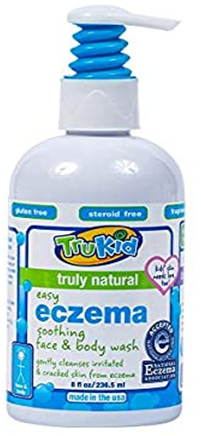
TruKid built its name on products for children with eczema-prone skin, and this is the wash from that range: a combined face and body wash that the manufacturer describes as unscented, fragrance-free and steroid-free, and free of parabens and phthalates. The brand is PETA-certified cruelty-free. Because it is a face-and-body product, one bottle covers the bath and the sink, which suits younger children who are being washed rather than washing themselves.
Two honest caveats. First, “formulated for eczema-prone skin” is the manufacturer’s positioning, not a treatment claim, see the safety note below on what actually manages eczema. Second, if the National Eczema Association Seal matters to you, check the specific product in the NEA’s own directory before buying; listings change, and a brand’s other products carrying the Seal does not automatically extend it to this wash.
Cetaphil Gentle Skin Cleanser
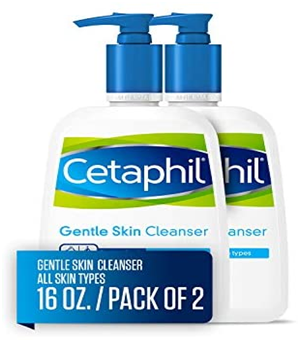
This is not a children’s product, and this guide is not going to pretend otherwise. Cetaphil’s Gentle Skin Cleanser (made by Galderma) is an all-ages family cleanser, the manufacturer describes it as suitable for all skin types and all ages, including children, and it earns its place here on the strength of its formula: soap-free, fragrance-free and non-comedogenic, with glycerin, niacinamide and panthenol. It can be used with water or wiped off without it, which is genuinely useful for a child who hates getting their face wet.
Set expectations about texture: it is a lotion-like cleanser that barely lathers, so it will not give that squeaky-clean foam some children expect, and it is a poor match for heavy sunscreen or face paint. For plain daily grime on sensitive skin, that mildness is the point.
Burt’s Bees Gentle Cream Cleanser with Aloe
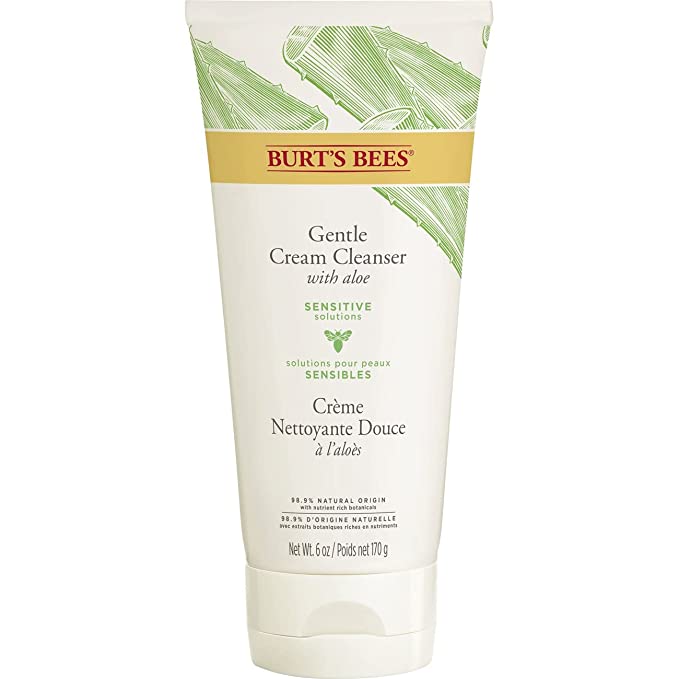
Another family product rather than a kids’ one, this is Burt’s Bees’ cleanser for adult sensitive skin, included for one verifiable reason: the manufacturer states it holds the National Eczema Association Seal of Acceptance, which means it is fragrance-free and has passed the NEA’s clinical safety testing requirements. As with every product here, confirm the listing in the NEA directory before buying. It is a soap-free cream cleanser, 98.9% natural origin by the brand’s calculation, built on sunflower seed oil and coconut oil with cotton extract and aloe, and it is Leaping Bunny certified.
The limitations are equally concrete: as a cream cleanser it cleans by dissolving rather than foaming, so older children may find it feels like moisturizer; and it contains beeswax, so it is not vegan. For an older child with reactive, eczema-prone skin whose pediatrician has suggested keeping everything fragrance-free, it is a reasonable shared bathroom-shelf option.
Everyone 3-in-1 Soap for Kids
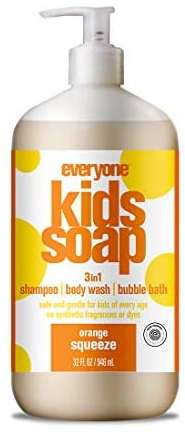
Honesty about what this is: not a facial cleanser. Everyone’s 3-in-1 Soap for Kids (by EO Products) is a shampoo, body wash and bubble bath in one 32 fl oz pump bottle, and it is in this guide because many families wash faces with the bath soap that is already there. Its ingredient list is built on an organic herbal blend of aloe, chamomile, calendula and white tea, and the manufacturer states it contains no dyes, parabens, phthalates or synthetic fragrances.
It is, however, scented (Orange Squeeze, Lavender Lullaby or Tropical Coconut Twist, fragranced with essential oils), so it is not the right choice for a fragrance-sensitive or eczema-prone child, whatever the “for kids” label suggests. Think of it as the convenient family bath bottle for children whose skin tolerates scent, not as a skincare product.
For tweens and teens: first oiliness and breakouts
Somewhere around age 9 to 12, skin starts changing: oil glands wake up, the T-zone gets shiny, and the first spots appear. This is the stage the products below are made for. They are not for younger children, and the age guidance stated by each manufacturer is quoted so you can check it against your own child.
California Kids #superclear Face Wash (California Baby)
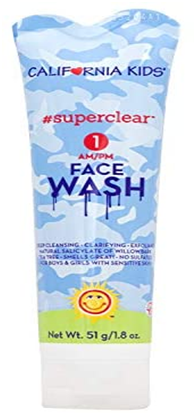
California Baby makes this small (1.8 fl oz) face wash under its California Kids label, and positions it for sensitive skin with mild outbreaks. The active ingredient story is worth reading carefully: the salicylic acid in it is derived from willow bark (Salix nigra), the manufacturer states, rather than added as a standalone drug ingredient. The foaming comes from Chilean soap bark (quillaja), the formula includes calendula, and it is free of SLS, sulfates and benzoyl peroxide. It is scented with cypress, tea tree and mint essential oils, pleasant to most tweens, but still a fragrance source, so patch test first if your child’s skin is reactive. The obvious practical limitation is the size: 1.8 fl oz is a travel-sized bottle, and a daily user will get through it quickly.
TBH Kids Spot Foam Face Wash
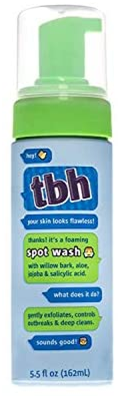
TBH (the kids’ line from Fairy Tales Hair Care) makes this foaming wash for preteens and teens with oily, breakout-prone skin. The salicylic acid content is 0.4%, as stated in TBH’s own product information. The ingredient list also includes willow bark extract, aloe vera, witch hazel and jojoba, and the brand states the formula is sulfate- and paraben-free. Its own directions are refreshingly sensible: lather gently, do not scrub harshly, pat dry.
The limitation to weigh: unlike most products in this guide, the Spot Foam Wash contains added fragrance (listed as parfum, phthalate-free). For a tween with normal, oily skin that is a reasonable trade; for a fragrance-sensitive child, choose one of the fragrance-free options above instead, and for younger children, salicylic acid products are simply not the right category.
Kidskin T-Blast Foaming Facial Cleanser
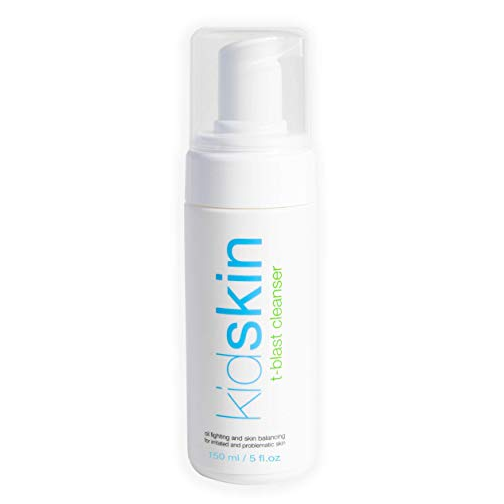
Kidskin’s T-Blast is a foaming cleanser formulated with 0.4% tea tree oil, per the manufacturer, and the brand states it is made for kids, preteens and teens aged 8 to 17 with oily, breakout-prone skin. The formula is paraben-, sulfate- and gluten-free according to the brand.
This product needs the clearest framing in the guide, because its marketing leans hard on tea tree oil’s antibacterial reputation. Tea tree oil being an ingredient tells you what is in the bottle; it does not make a face wash a treatment for eczema, infections or any other skin condition, and no cleanser should be used “to control” a disease. If your child has a skin condition, that conversation belongs with a doctor. Two practical notes from the brand’s own listings: the tea tree scent is strong, and the brand itself says this cleanser is not for sensitive skin. Believe both.
Good For You Girls Gel Cleanser
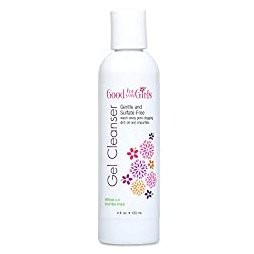
Good For You Girls makes skincare specifically for girls in the tween and teen years, and its Gel Cleanser is a gel-to-foam daily wash. The brand lists glycerin, allantoin and sodium PCA for hydration, with aloe, chamomile, white tea, green tea and vitamin E among its botanicals, and states the cleanser is pH-balanced and free of parabens, sulfates, phthalates, silicone, synthetic fragrance and dyes. It is vegan, gluten-free and certified cruelty-free.
The limitations are about fit rather than formula: the girls-only positioning will not suit every family, and the cleanser is most often sold as part of the brand’s three-step set (cleanser, toner, moisturizer), a set a young tween does not need. If you buy it, buy the cleanser alone and keep the routine at that.
A safety note on eczema, acne and cleanser claims
Eczema and acne are medical conditions. Cleansers are cosmetics. The NHS states plainly that atopic eczema cannot be cured; it is managed, mainly with emollients (moisturizing treatments), by washing with an emollient instead of soap where soap is a trigger, and with medical treatment when it flares or becomes infected. Acne that is persistent, widespread, painful or leaving marks likewise deserves a pediatrician or dermatologist, not a stronger face wash.
So when any product, in this guide or anywhere else, promises to cure eczema outright, wipe out every bacterial, viral or fungal skin condition, heal wounds or guarantee clear skin in a set number of weeks, treat that as a reason to put it back on the shelf. For products assessed as suitable for people with eczema, the National Eczema Association’s product directory is the reliable reference, because its Seal is based on fragrance-free formulas and clinical safety testing rather than marketing.
FAQ
Do young children need a facial cleanser at all? Usually not. For babies and young children, warm water and a soft cloth are enough for everyday dirt, and dermatology guidance is to use a mild, fragrance-free cleanser only where skin is actually dirty. A cleanser becomes more useful for removing sunscreen and sweat, and later, when tween skin starts producing more oil.
Can my child use an adult face wash? Sometimes, yes, the formula matters more than the character on the bottle. Two products in this guide (Cetaphil and Burt’s Bees) are adult, all-ages cleansers that suit older children precisely because they are fragrance-free and soap-free. What children should not borrow is adult anti-aging or strong anti-acne skincare; if you are unsure about a specific product, ask your pediatrician.
A cleanser stings my child’s skin. What should we do? Stop using it, rinse with plain water, and do not reapply it to “test” again. Note the product name in case it happens with others, the shared ingredient is often fragrance. If redness, swelling, blistering or a spreading rash appears, or the skin does not settle, speak to your pediatrician rather than shopping for another cleanser.
The bottom line
For young children, the best facial cleanser is usually the one you barely use: water first, and a fragrance-free, soap-free wash (TruKid, Cetaphil or the NEA-accepted Burt’s Bees cream) when water is not enough. For tweens with the first signs of oiliness, the age-labeled salicylic-acid and tea tree options in the second half of this guide are the appropriate category, used gently, once a day, with no expectation that a wash alone will manage acne or eczema. Match the product to the age on its label and the skin in front of you, and let doctors handle anything that looks like a condition rather than dirt.
Keep reading: if bath time at your house also means hair battles, our guide to gentle, no-pull hair bands for kids and toddlers may help, and for the youngest babies, see our roundup of changing pads for babies with sensitive skin. Browse more kids’ care and product guides for the rest of the series.